When prompting text models like ChatGPT or Claude, assigning a persona is a common technique. Instructions like "act as a senior copywriter" reliably refine tone, analytical depth, and structural choices.
Many creators carry this habit into image generation tools. Prompts frequently open with role-playing directives, asking the model to act as a high-fashion photographer for Vogue or a documentary photographer for National Geographic.
To verify whether role-playing prefixes actually affect pixel rendering, we ran a series of controlled tests across both open-ended and highly specific prompts.
Test design: A two-by-two matrix in fashion photography
We selected high-fashion editorial portraiture as the baseline theme because styling, lighting, and art direction are central to the genre.
The experiment evaluated two distinct conditions:
Adding a persona to an open-ended prompt to test if it shifts the model's default aesthetic baseline.
Adding the same persona to a highly specific prompt with explicit camera, lighting, and wardrobe specs to check for subtle refinements.
Test prompts
Experiment 1: Open-ended base prompts
Prompt 1A (Base):
A portrait of a young woman wearing an oversized trench coat on a city street, editorial photography.Prompt 1B (Base with persona):
You are a high-fashion editorial photographer shooting for Vogue magazine. A portrait of a young woman wearing an oversized trench coat on a city street, editorial photography.Experiment 2: Specific base prompts
Prompt 2A (Base):
A full-body editorial portrait of a 25-year-old East Asian woman wearing a structured beige wool oversized trench coat with dark sunglasses, standing on a rainy crosswalk in Tokyo at dusk. High-contrast directional lighting from neon storefronts casts reflections across wet asphalt. Shot on a 85mm f/1.4 lens, eye-level angle, sharp focus, cinematic color grading with muted warm tones.Prompt 2B (Base with persona):
You are a high-fashion editorial photographer shooting for Vogue magazine. A full-body editorial portrait of a 25-year-old East Asian woman wearing a structured beige wool oversized trench coat with dark sunglasses, standing on a rainy crosswalk in Tokyo at dusk. High-contrast directional lighting from neon storefronts casts reflections across wet asphalt. Shot on a 85mm f/1.4 lens, eye-level angle, sharp focus, cinematic color grading with muted warm tones.Generation results: Personas produced no visible difference
Generating multiple variations in ChatGPT and Gemini showed that adding a persona prefix produced no perceptible visual impact. Model poses, composition balance, lighting ratios, and fabric textures remained consistent across versions with and without the role instruction.
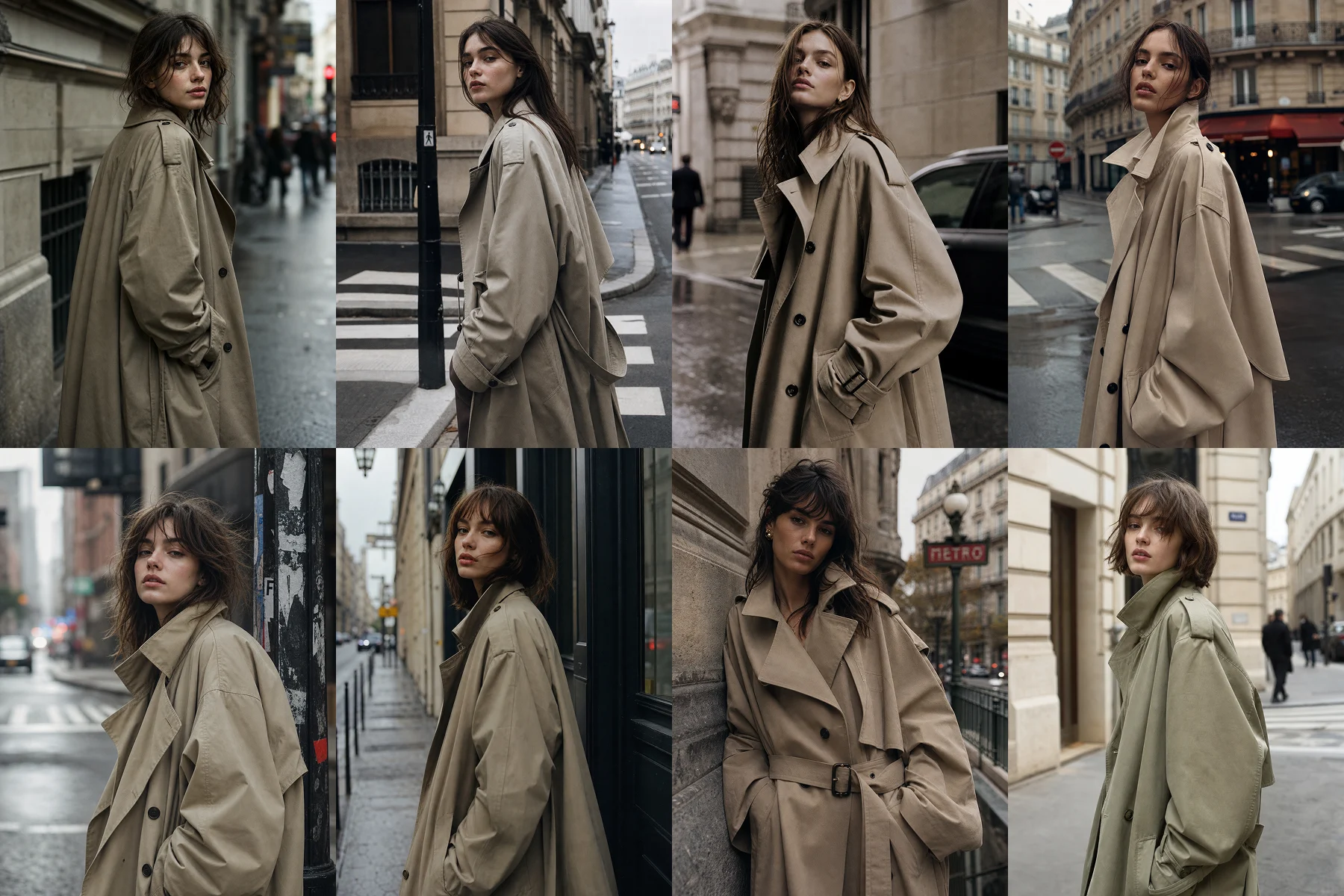
In open-ended tests, both prompts produced varied compositions based strictly on the model's default baseline. The persona prefix did not enforce an editorial magazine standard.
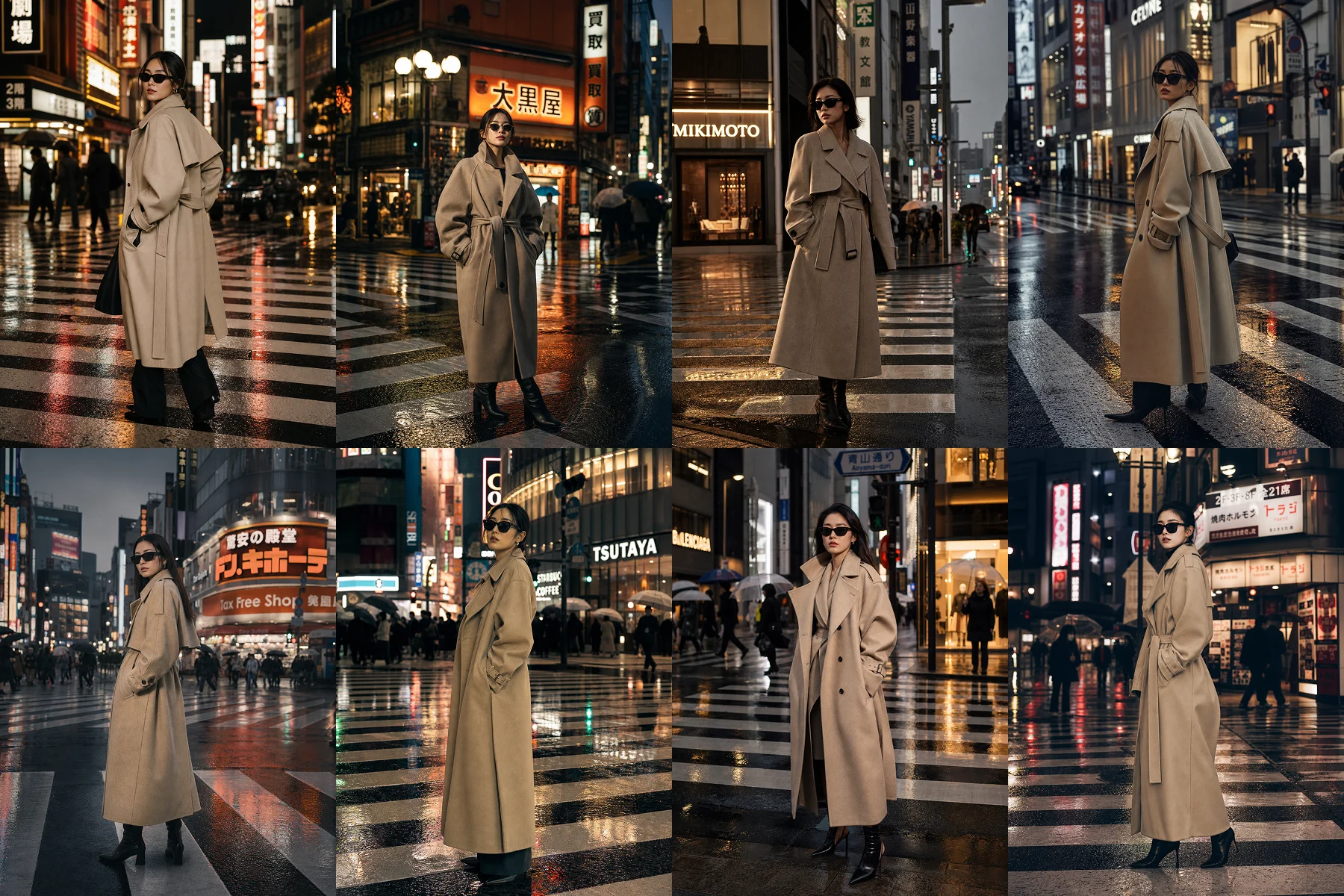
In detailed tests, the visual output was shaped entirely by the concrete descriptors: the 85mm lens, the neon reflections on wet asphalt, and the structured beige wool coat. The persona phrase was effectively ignored during pixel synthesis.
Secondary verification: Documentary photojournalism
To ensure this behavior was not unique to fashion photography, we repeated the test within a documentary photojournalism theme. We paired a portrait of an elderly fisherman on a foggy dock with a National Geographic photographer persona.
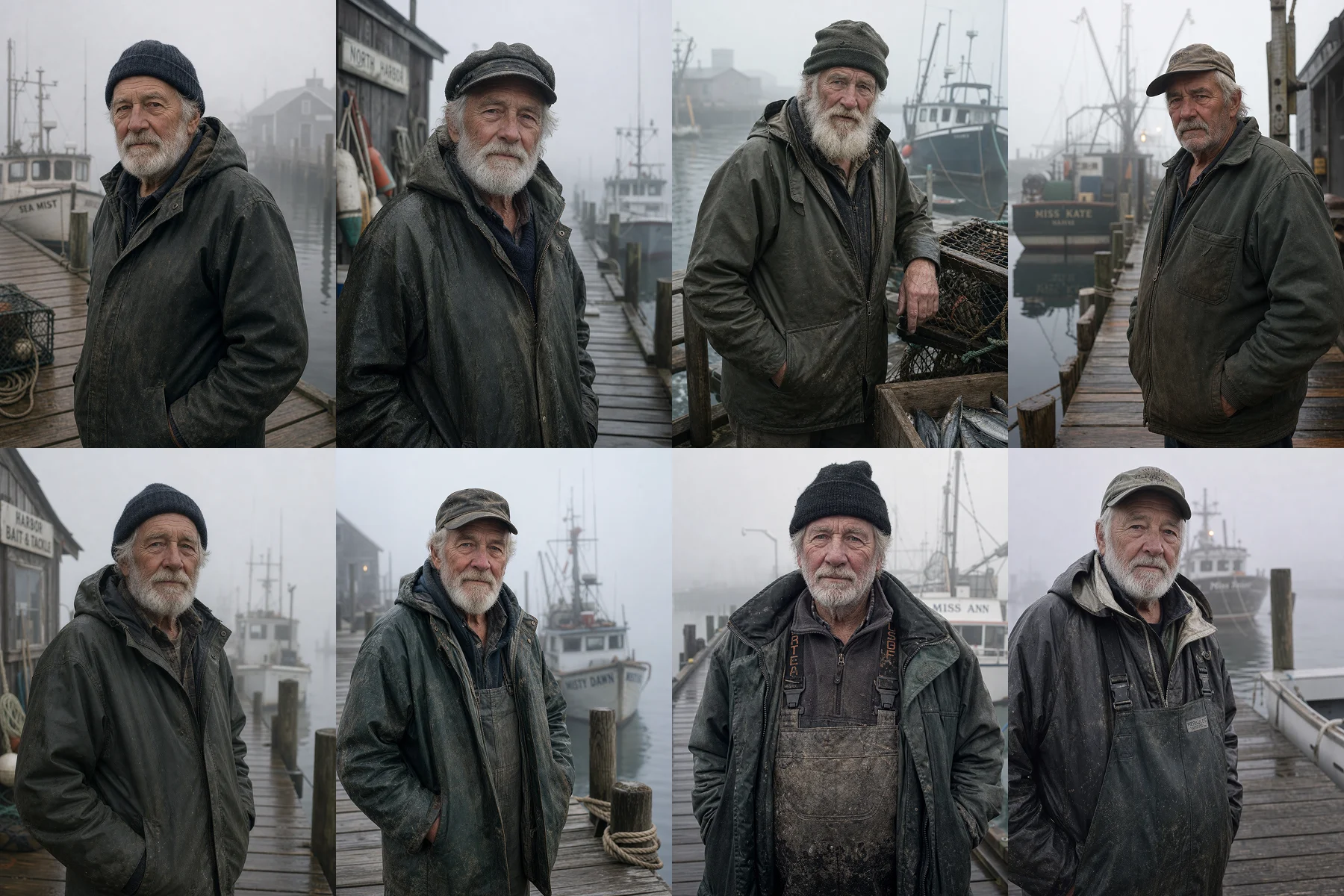
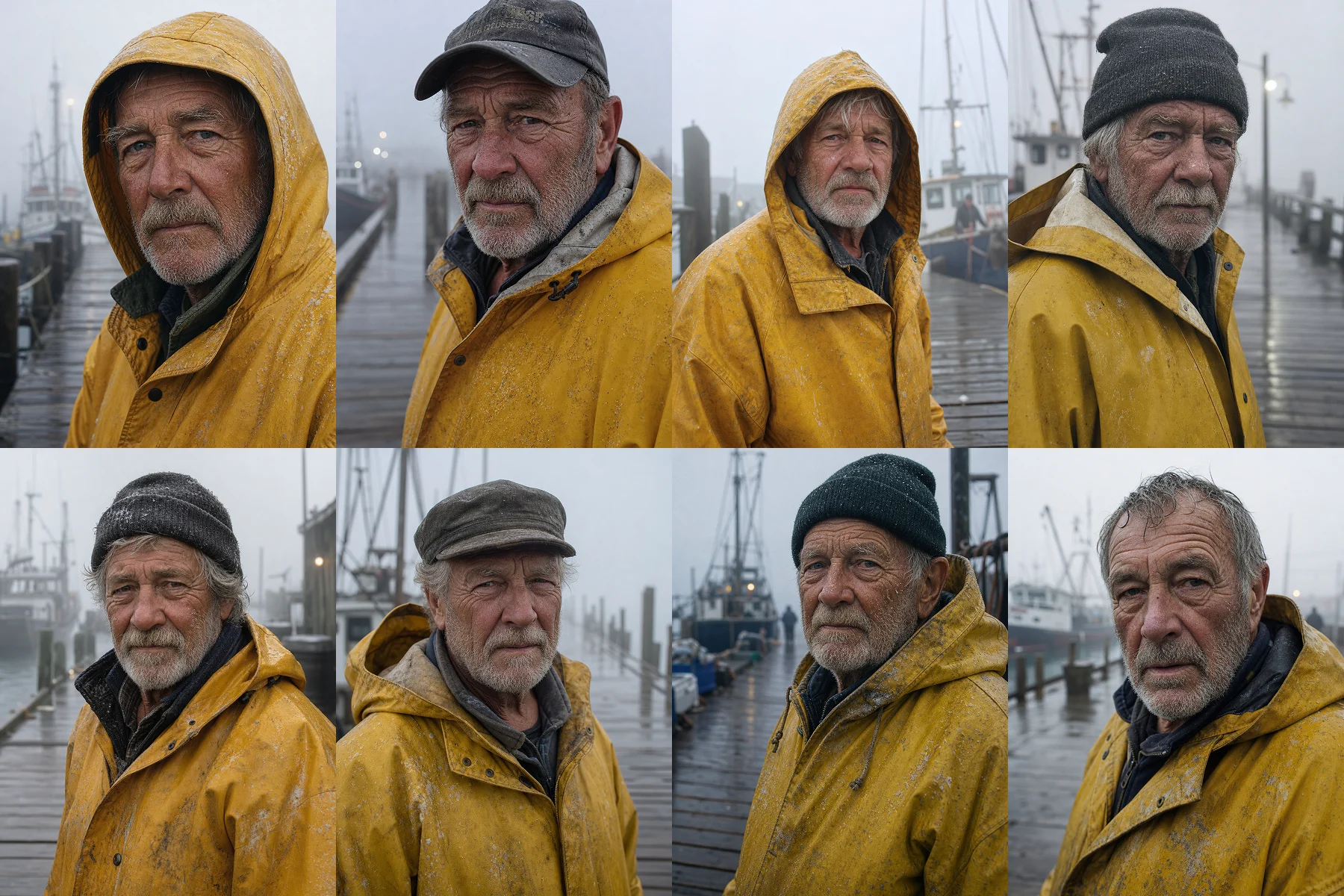
The outcome remained the same. Weathered textures, atmospheric fog, and natural documentary tones appeared only when explicitly written into the prompt clauses, not as a byproduct of the persona instruction.
Why image encoders ignore persona instructions
The difference between text models and image generators comes down to how text encoders process tokens.
Chatbot LLMs simulate an conversational identity by adjusting probabilities for tone, vocabulary, and perspective. In contrast, text encoders in image generation models isolate physical visual entities: concrete nouns, material textures, lighting directions, and spatial relationships.
A meta-instruction telling the model who it is supposed to be contains no renderable physical attributes. Because there is no tangible object, color value, or lighting condition attached to the abstract persona itself, the image encoder bypasses it entirely during image synthesis.
How to use personas effectively in your workflow
Including persona instructions directly in an image prompt adds token length without refining the final visual.
If you want to leverage the domain knowledge of a specific persona, integrate it earlier in your workflow through a two-stage process:
Ideate with a text LLM: Assign the persona to a conversational model like ChatGPT or Claude. Ask it to plan the visual details as that specialist. For instance, instruct it to act as a National Geographic photographer planning a coastal documentary portrait.
Extract concrete visual parameters: The text model translates the persona into tangible scene attributes: 50mm f/2 lens specifications, directional morning mist, weathered facial skin, and salt-stained wax canvas jackets.
Apply the exact descriptors to the image generator: Copy those concrete attributes directly into your image generation prompt.
Using a text model to convert abstract expertise into physical scene parameters ensures your image generator receives the exact visual signals it needs to render.