Non-English creators often run into a practical dilemma when drafting image prompts: write in English because underlying training datasets skew heavily toward it, or prompt in a native language when building culturally specific scenes?
A common concern is cultural cross-contamination. Creators often worry that writing a prompt in Korean for a classic Japanese cinema scene might unintentionally pull in contemporary Korean visual traits.
To see if input language changes visual fidelity or cultural accuracy, we ran parallel tests across English, Spanish, Japanese, and Korean using high-density cinematic prompts on current image generation models.
Test design: Two culturally anchored scenes across four languages
Instead of testing isolated objects, we selected two scenarios that require precise architectural context, period wardrobe, and specific color grading. We translated the exact descriptors into four languages and generated outputs using ChatGPT and Gemini.
Test prompts
Theme 1: Japanese youth drama film still
A nostalgic scene featuring high school students on a coastal train station platform at sunset, complete with a sea breeze, vintage bicycles, and Kodak Portra 400 color grading.
English:
A cinematic film still from a Japanese nostalgic youth drama movie. A high school boy and girl in navy and white summer school uniforms stand on a coastal countryside train station platform at sunset. In the background, calm ocean waves and a quiet railway crossing are visible under warm golden hour light. Gentle sea breeze blowing hair, a vintage bicycle leaning against the station fence, soft nostalgic film grain, Kodak Portra 400 color grading, shot on 35mm anamorphic lens, shallow depth of field, 16:9 aspect ratio.Spanish:
Un fotograma cinematográfico de una nostálgica película dramática juvenil japonesa. Un chico y una chica de secundaria con uniformes escolares de verano en azul marino y blanco están en el andén de una estación de tren rural costera al atardecer. Al fondo, se ven tranquilas olas del mar y un cruce de ferrocarril silencioso bajo la cálida luz de la hora dorada. Suave brisa marina que mueve el cabello, una bicicleta vintage apoyada en la cerca de la estación, suave grano de película nostálgico, gradación de color Kodak Portra 400, grabado con lente anamórfica de 35 mm, baja profundidad de campo, relación de aspecto 16:9.Japanese:
日本のどこか懐かしい青春映画のシネマティックなフィルムスチル。夕暮れ時の海沿いの田舎の駅のホームに、ネイビーとホワイトの夏服を着た高校生の男女が立っている。背景には、温かいゴールデンアワーの光の下で穏やかな海の波と静かな踏切が見える。髪を揺らす穏やかな海風、駅の柵に立てかけられたヴィンテージの自転車、柔らかくノスタルジックなフィルムグレイン、Kodak Portra 400のカラーグレーディング、35mmアナモルフィックレンズ撮影、浅い被写界深度、16:9アスペクト比。Korean:
일본 특유의 아련한 청춘 드라마 영화의 시네마틱 필름 스틸컷. 해 질 녘 해변가 시골 간이역 승강장에 네이비와 화이트 여름 교복을 입은 남녀 고등학생이 서 있다. 배경에는 따뜻한 골든 아워 빛 아래 잔잔한 바다 파도와 한적한 철길 건널목이 보인다. 머리카락을 스치는 부드러운 바닷바람, 승강장 울타리에 기대어 있는 빈티지 자전거, 부드러운 아련한 필름 그레인, 코닥 포트라 400 색감, 35mm 아나모픽 렌즈 촬영, 얕은 심도, 16:9 화면비.Theme 2: 1960s American mid-century retro diner
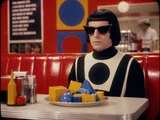
A blue-hour scene at a roadside diner along Route 66, featuring red vinyl bar stools, rain-slicked glass, glowing neon signs, and 35mm film contrast. Identical translations were tested across the same four languages.
English:
A cinematic film still of a classic 1960s American retro diner along Route 66 at blue hour twilight. A lone traveler sits at the stainless steel counter with red vinyl bar stools, looking out the large glass window. Outside, a glowing vintage red and turquoise neon sign illuminates the wet desert highway. Interior warm tungsten light contrasting with deep cool blue evening exterior, rain streaks on window glass, chrome coffee maker reflections, 35mm cinematic film texture, rich shadow contrast, photorealistic editorial photography.Spanish:
Un fotograma cinematográfico de un clásico restaurante retro estadounidense de los años 60 a lo largo de la Ruta 66 durante el crepúsculo de la hora azul. Un viajero solitario se sienta en el mostrador de acero inoxidable con taburetes de vinilo rojo, mirando por la gran ventana de vidrio. Afuera, un letrero de neón vintage en rojo y turquesa ilumina la carretera mojada del desierto. Cálida luz interior de tungsteno en contraste con el exterior azul profundo de la tarde, gotas de lluvia en el vidrio de la ventana, reflejos en la cafetera de cromo, textura de película cinematográfica de 35 mm, rico contraste de sombras, fotografía editorial fotorrealista.Japanese:
ブルーアワーの黄昏時、ルート66沿いにあるクラシックな1960年代のアメリカンレトロダイナーのシネマティックなフィルムスチル。赤いビニール製バースツールが並ぶステンレス製カウンターに一人座り、大きなガラス窓の外を眺める旅人。外では、ヴィンテージの赤とターコイズのネオンサインが濡れた砂漠のハイウェイを照らしている。深い青の夕暮れの外景と対比をなす店内の温かいタングステン照明、窓ガラスの雨の跡、クローム製コーヒーメーカーの反射、35mmシネマティックフィルムの質感、豊かなシャドウのコントラスト、フォトリアルなエディトリアル写真。Korean:
블루 아워 황혼 무렵 66번 국도를 따라 자리 잡은 클래식한 1960년대 미국 레트로 다이너의 시네마틱 필름 스틸컷. 빨간색 비닐 바 의자가 있는 스테인리스 스틸 카운터에 홀로 앉아 큰 유리창 밖을 내다보는 여행자. 창밖에는 붉은색과 청록색으로 빛나는 빈티지 네온사인이 젖은 사막 고속도로를 비춘다. 짙은 푸른 저녁 외경과 대비되는 실내의 따뜻한 텅스텐 조명, 창유리의 빗방울 자국, 크롬 커피 머신의 반사, 35mm 시네마틱 필름 질감, 풍부한 암부 대비, 사실적인 에디토리얼 사진.Generation results: Cross-language visual analysis
Side-by-side comparisons across English, Spanish, Japanese, and Korean showed consistent visual handling. Input language introduced no observable drop in detail, lighting balance, framing, or regional authenticity.
Theme 1: Japanese youth drama film still
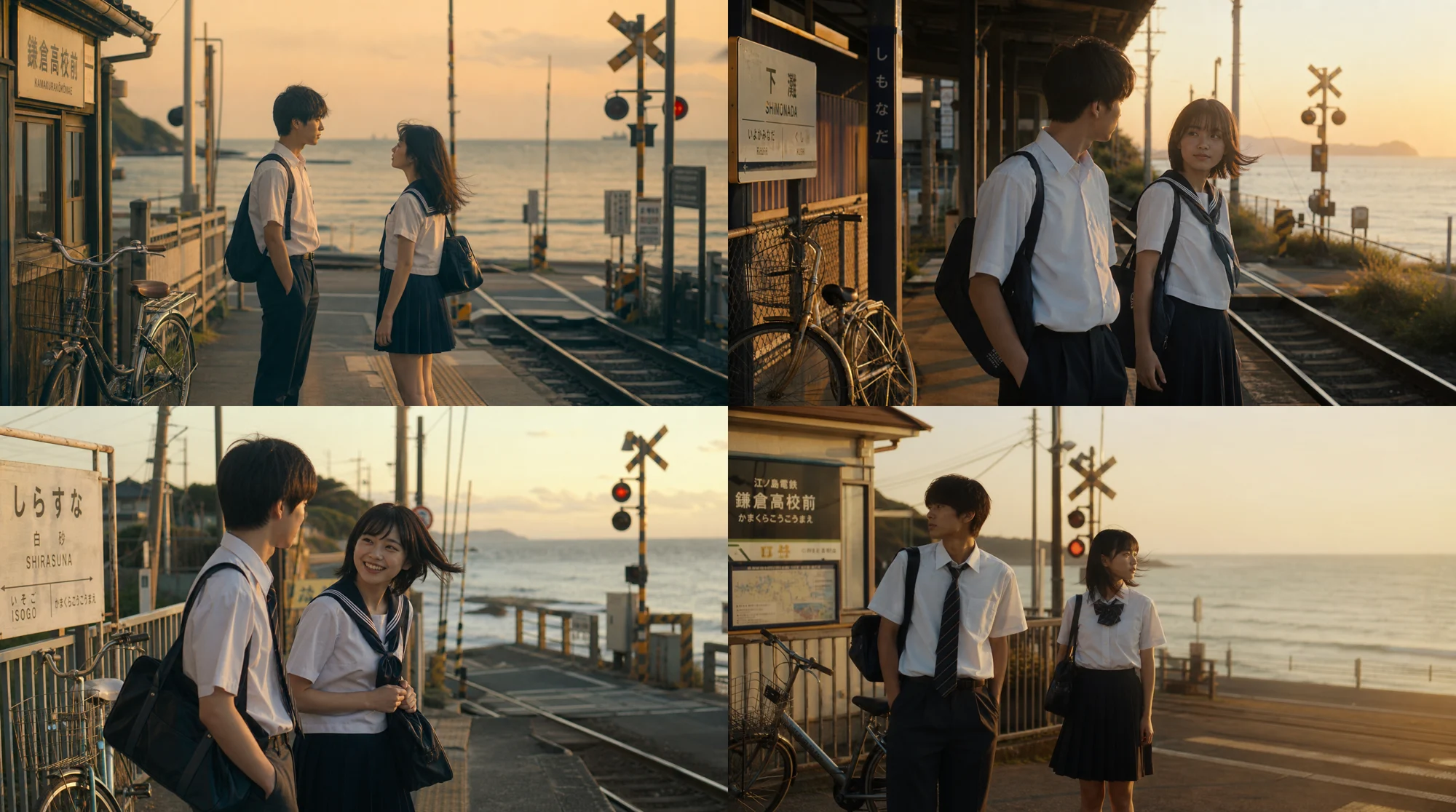
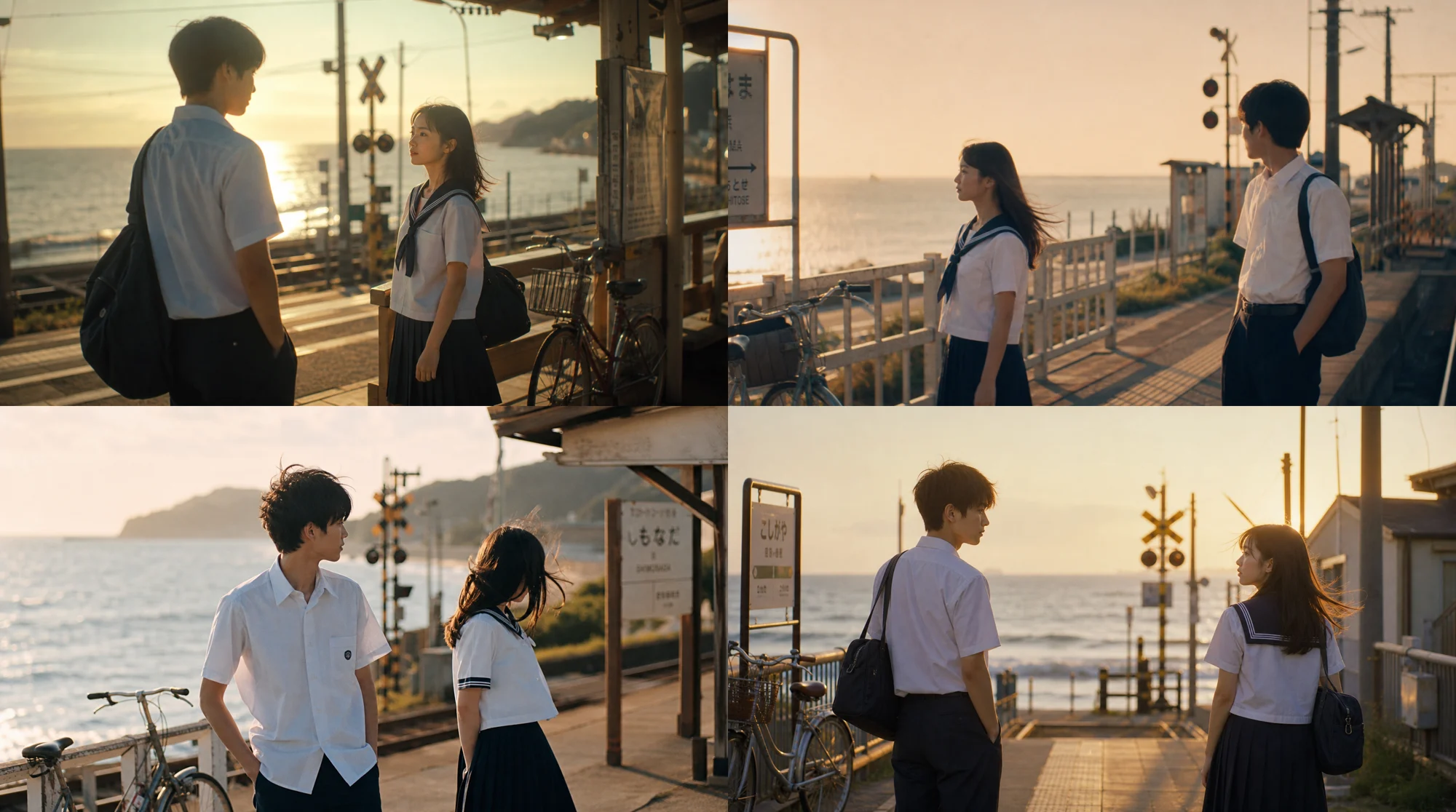
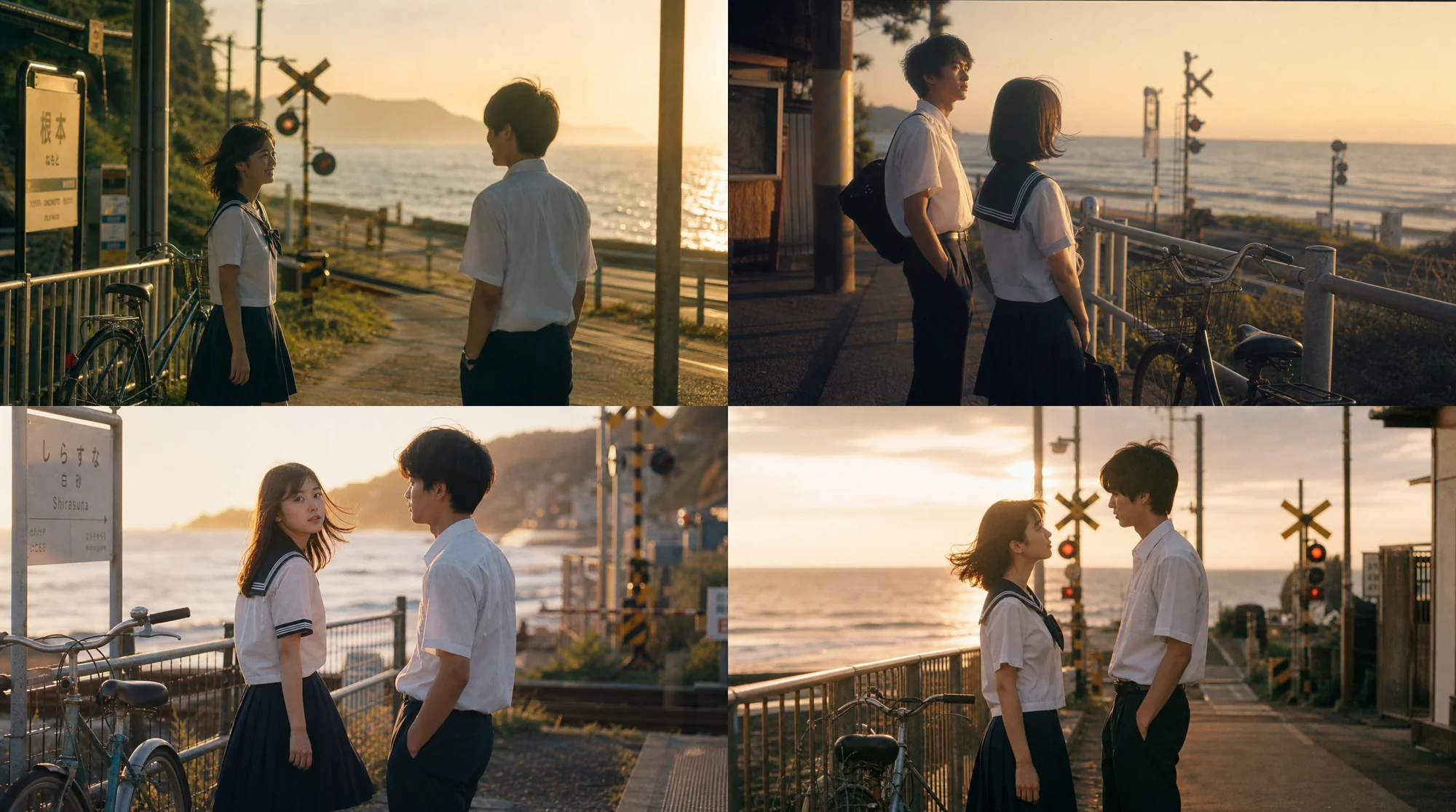
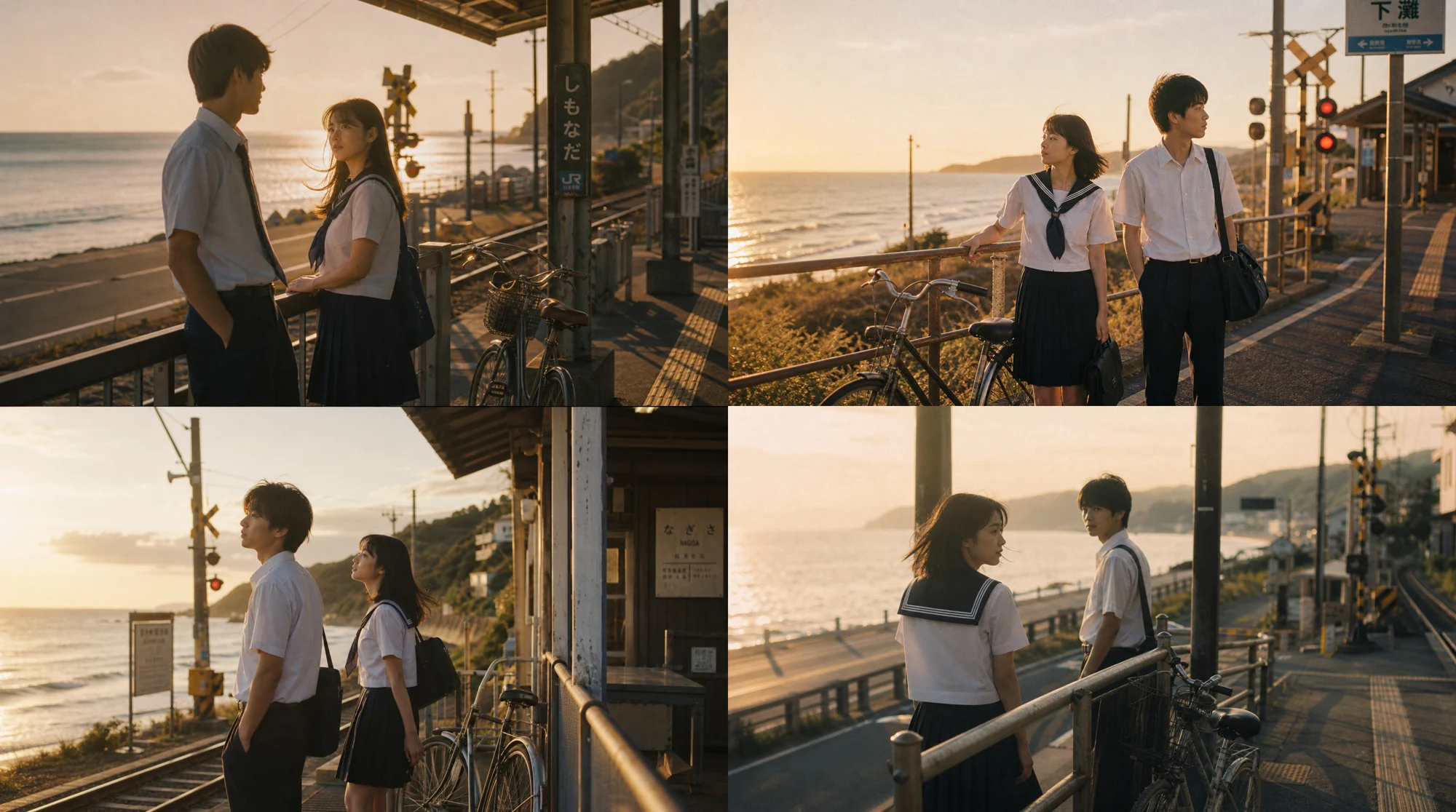
The most significant takeaway was the preservation of cultural context. When prompting in Korean for a Japanese period scene, the output contained no aesthetic bleed from Korean media tropes. All four languages produced authentic Japanese uniform cuts, rural coastal architecture, and character styling with matching fidelity.
Theme 2: 1960s American retro diner
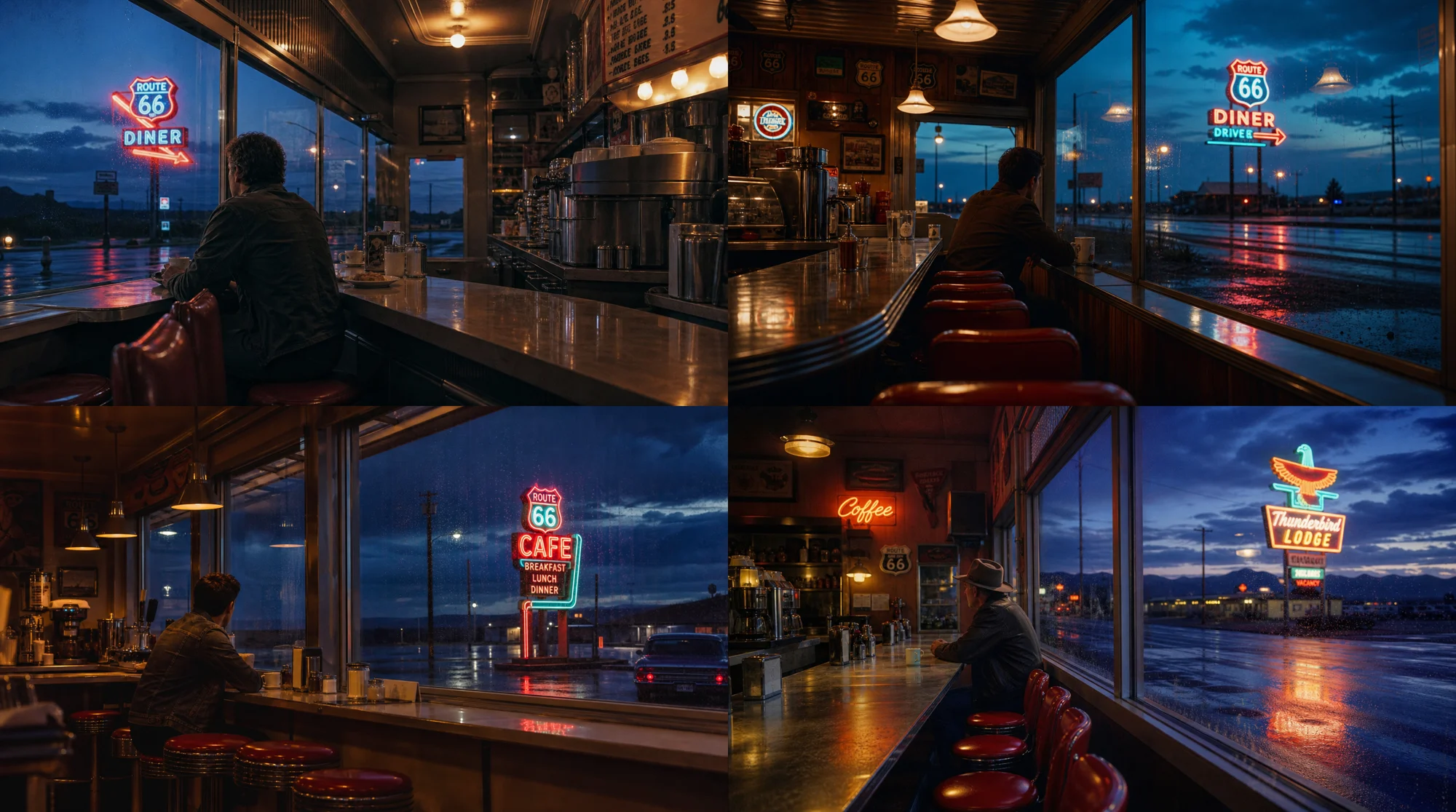
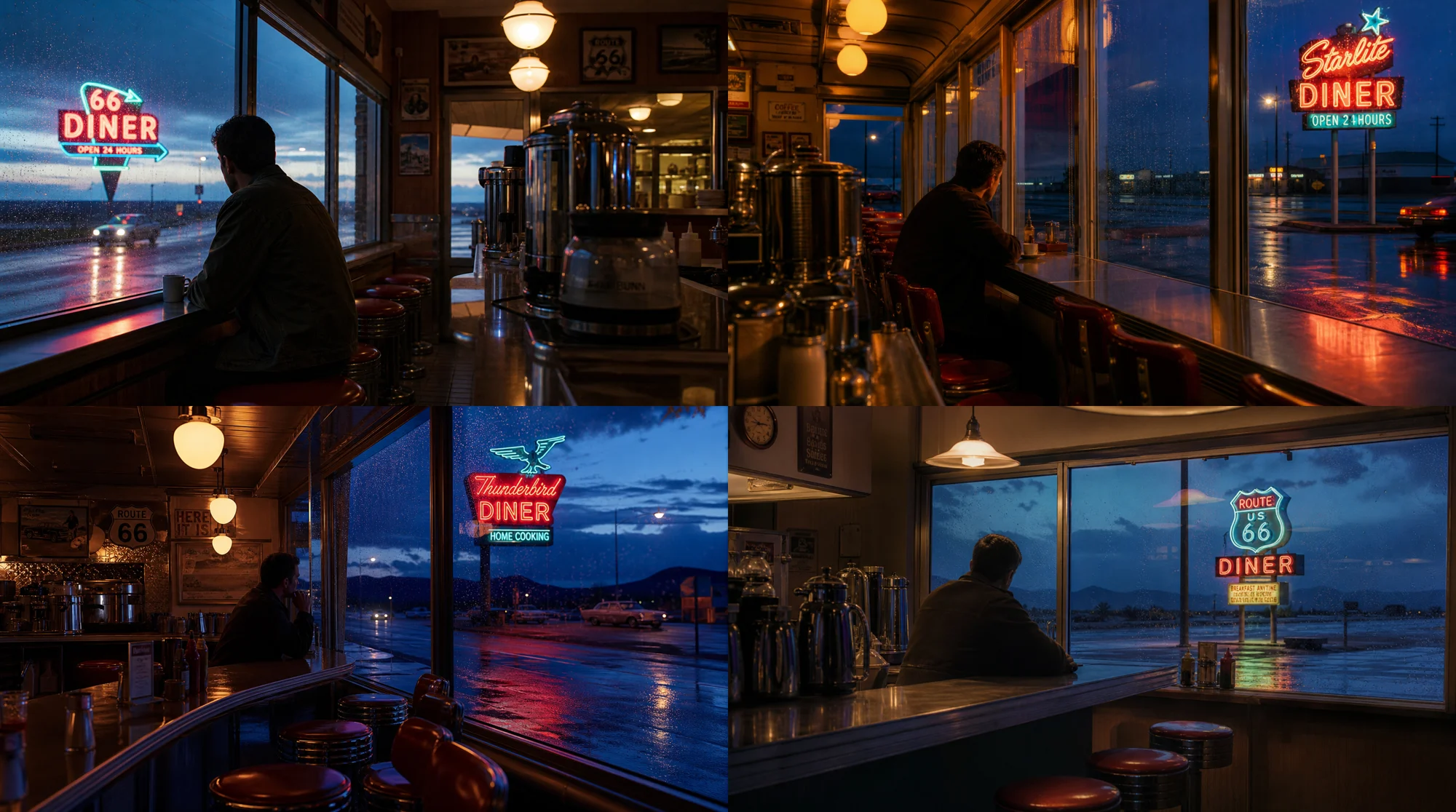
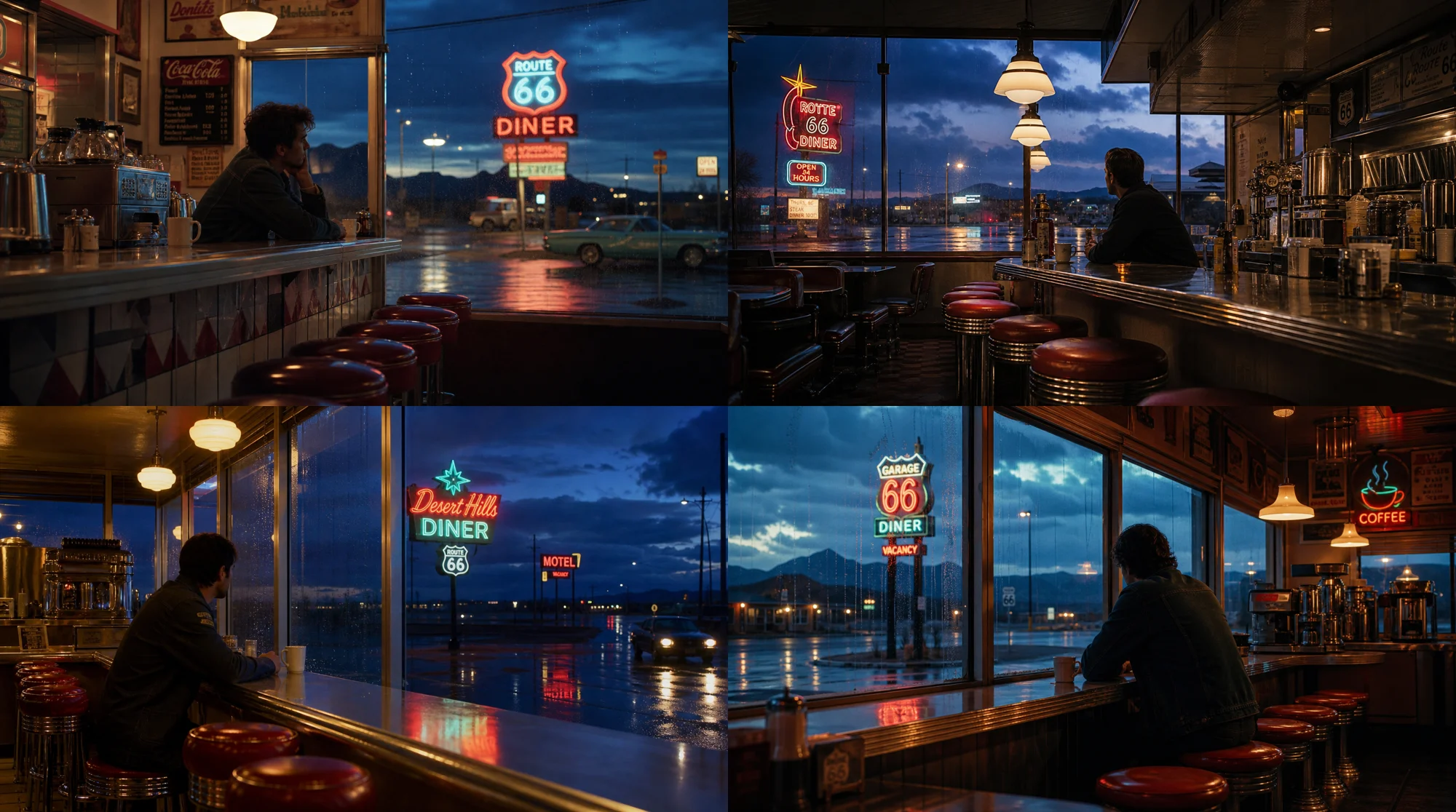
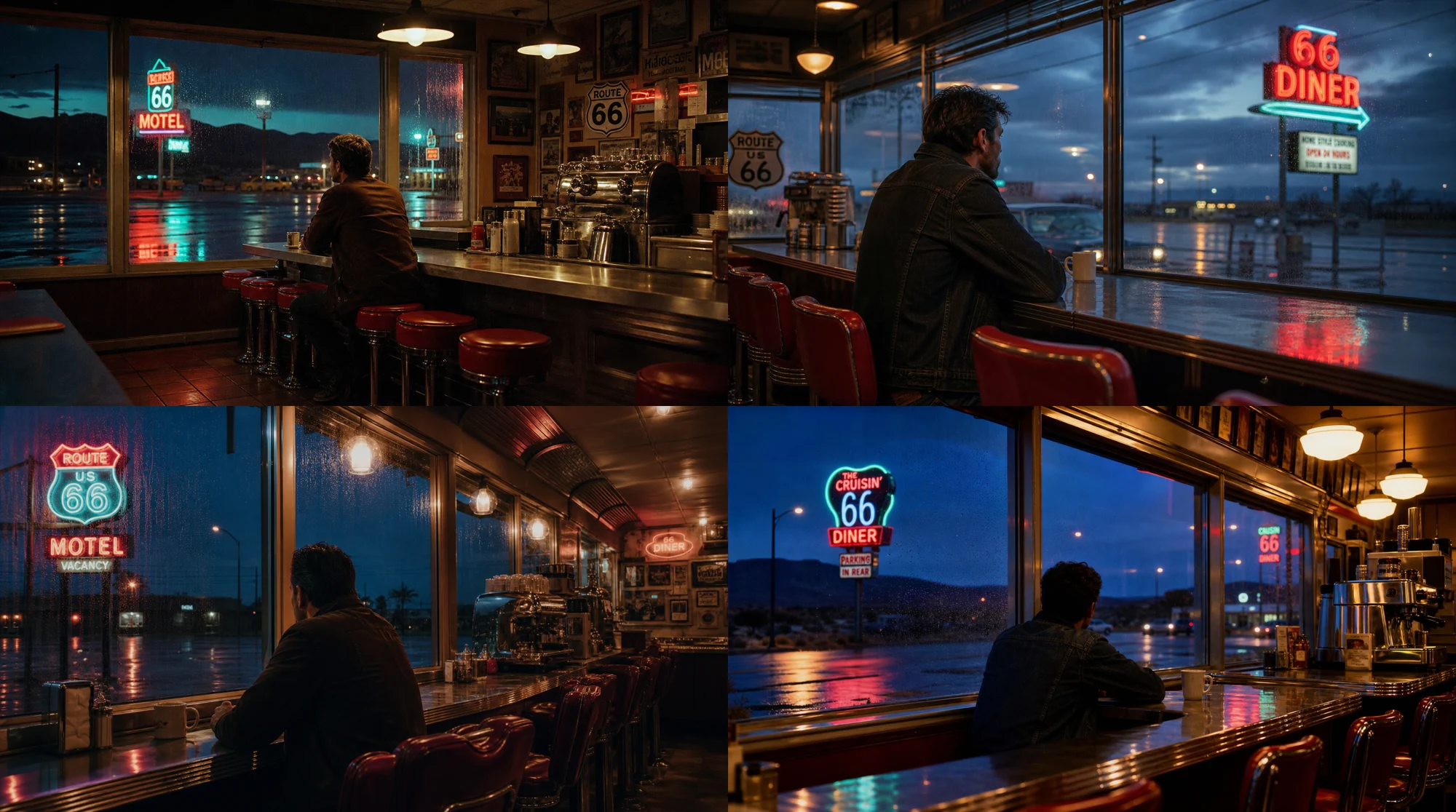
The diner scene demonstrated identical stability. Neon light scattering, stainless steel highlights, and interior contrast held steady across all four languages without stylistic shifts or distorted artifacts.
How multimodal text encoders handle multilingual inputs
This consistency stems from how current text encoders process cross-lingual data.
Modern vision-language systems do not rely on basic surface translation layers. Instead, they project multilingual inputs into a shared semantic embedding space.
Descriptors such as "Japanese youth drama," "日本の青春映画," and "일본 청춘 드라마" map directly to the same underlying visual concept clusters. Because the downstream diffusion pipeline receives equivalent semantic embeddings, the final renders remain visually indistinguishable regardless of the source language.
Practical workflow takeaways
These findings simplify prompt composition for creators working in non-English environments:
Write in your strongest language: Translating detailed visual ideas through external tools often strips out nuanced atmosphere cues. Drafting in your native language lets you articulate exact lighting, composition, and material traits with greater precision.
Anchor the setting with clear context: You do not need to search for obscure foreign-language terms. Clearly defining the physical setting, era, wardrobe, and lighting gives text encoders enough context to resolve the correct visual details.
Focus on concrete photographic controls: Visual quality depends far more on specifying tangible elements (camera angles, lens focal length, lighting ratios, and textural details) than on the language used to write them.