Do AI image generators prefer comma lists or full sentences?
Do AI image generators prefer comma lists or full sentences? We tested the same 2,000-character prompt written both ways in ChatGPT and Gemini, and in our runs the format made no visible difference.
Prompt habits tend to split two ways. Some creators stack comma-separated tags, a habit from earlier diffusion models that rewarded dense keyword lists. Others write full sentences, which ChatGPT and Gemini are built to read.
To compare them fairly, we kept every word the same and changed only the structure.
A controlled test with a 2,000-character prompt
Short prompts make it difficult to evaluate syntactic comprehension because models frequently interpolate missing details on their own. To evaluate how modern text encoders handle complex spatial relations, textures, and lighting, we designed a high-density, 2,000-character nature documentary prompt.
The test focused on a wild snow leopard on a Himalayan cliff ledge during golden hour. Every noun, adjective, and modifier remained identical between both versions. The only variable was structural syntax: comma-separated keyword chunks versus full grammatical sentences.
Test prompts
Prompt A: Comma-separated keyword list
National Geographic wildlife documentary photography, 600mm f/4 telephoto lens, award-winning nature photograph, hyper-realistic, RAW color grading, high shutter speed freezing motion, shallow depth of field, creamy background bokeh.

Subject: Adult wild snow leopard, Panthera uncia, muscular predatory posture, low stalking stance, dense smoky-gray winter coat, distinct black rosette patterns, white belly fur, long thick tail balancing horizontally, sharp claws slightly extended, intense amber-gold eyes, sharp focused gaze, dilated pupils, fine facial whiskers, open mouth with visible breath condensing into dense white steam in freezing alpine air.

Foreground: Rugged limestone cliff ledge, sharp rock textures, patches of powdery dry snow, front left paw pressing into snow surface, tiny crystalline snow particles dispersing into the air, frozen mountain lichen on rock crevices.

Midground: Sheer vertical granite canyon walls, snow-dusted dwarf juniper shrubs, dark jagged mountain ridges, distant frozen waterfall column with blue glacial ice textures, cold mountain atmosphere.

Background: Vast Himalayan mountain range, dramatic snow-covered peaks, Mount Everest silhouettes, soft atmospheric haze, sweeping high-altitude cloud layers.

Lighting and Atmosphere: Late afternoon golden hour sunset lighting, low-angle warm directional sunlight hitting leopard's back, sharp golden rim light outlining fur edges, long cool blue cast shadows across snow ground, fine floating airborne ice crystals catching sunlight, authentic crisp winter mountain atmosphere, micro contrast, extreme surface detail, pristine 8k resolution textures.
Prompt B: Grammatical narrative sentences
An award-winning National Geographic wildlife documentary photograph captured on a 600mm f/4 telephoto lens with high shutter speed freezing motion, featuring shallow depth of field, creamy background bokeh, hyper-realistic surface detail, RAW color grading, and pristine 8k resolution textures.

An adult wild snow leopard Panthera uncia with a dense smoky-gray winter coat, distinct black rosette patterns, and white belly fur is captured in a muscular predatory posture and low stalking stance. The leopard maintains its long thick tail balancing horizontally, while its sharp claws are slightly extended. Its intense amber-gold eyes with dilated pupils and sharp focused gaze look forward past fine facial whiskers, while its slightly open mouth releases warm breath condensing into dense white steam in the freezing alpine air.

In the foreground, the leopard moves across a rugged limestone cliff ledge filled with sharp rock textures, frozen mountain lichen in rock crevices, and patches of powdery dry snow. Its front left paw is pressing into the snow surface, causing tiny crystalline snow particles to disperse into the air.

In the midground, sheer vertical granite canyon walls, snow-dusted dwarf juniper shrubs, and dark jagged mountain ridges frame a distant frozen waterfall column showing blue glacial ice textures within the cold mountain atmosphere.

In the distant background, the vast Himalayan mountain range reveals dramatic snow-covered peaks and Mount Everest silhouettes beneath sweeping high-altitude cloud layers and soft atmospheric haze.

The entire scene is illuminated by late afternoon golden hour sunset lighting, where low-angle warm directional sunlight hits the leopard's back, creating a sharp golden rim light outlining fur edges. Long cool blue cast shadows stretch across the snow ground, while fine floating airborne ice crystals catch the sunlight with micro contrast throughout the crisp winter mountain atmosphere.
Test results and visual comparison
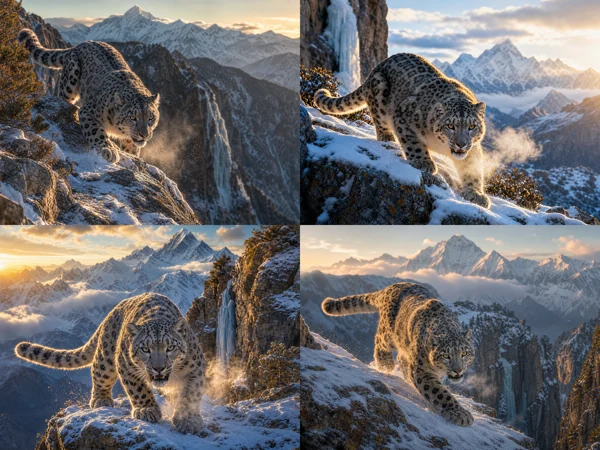
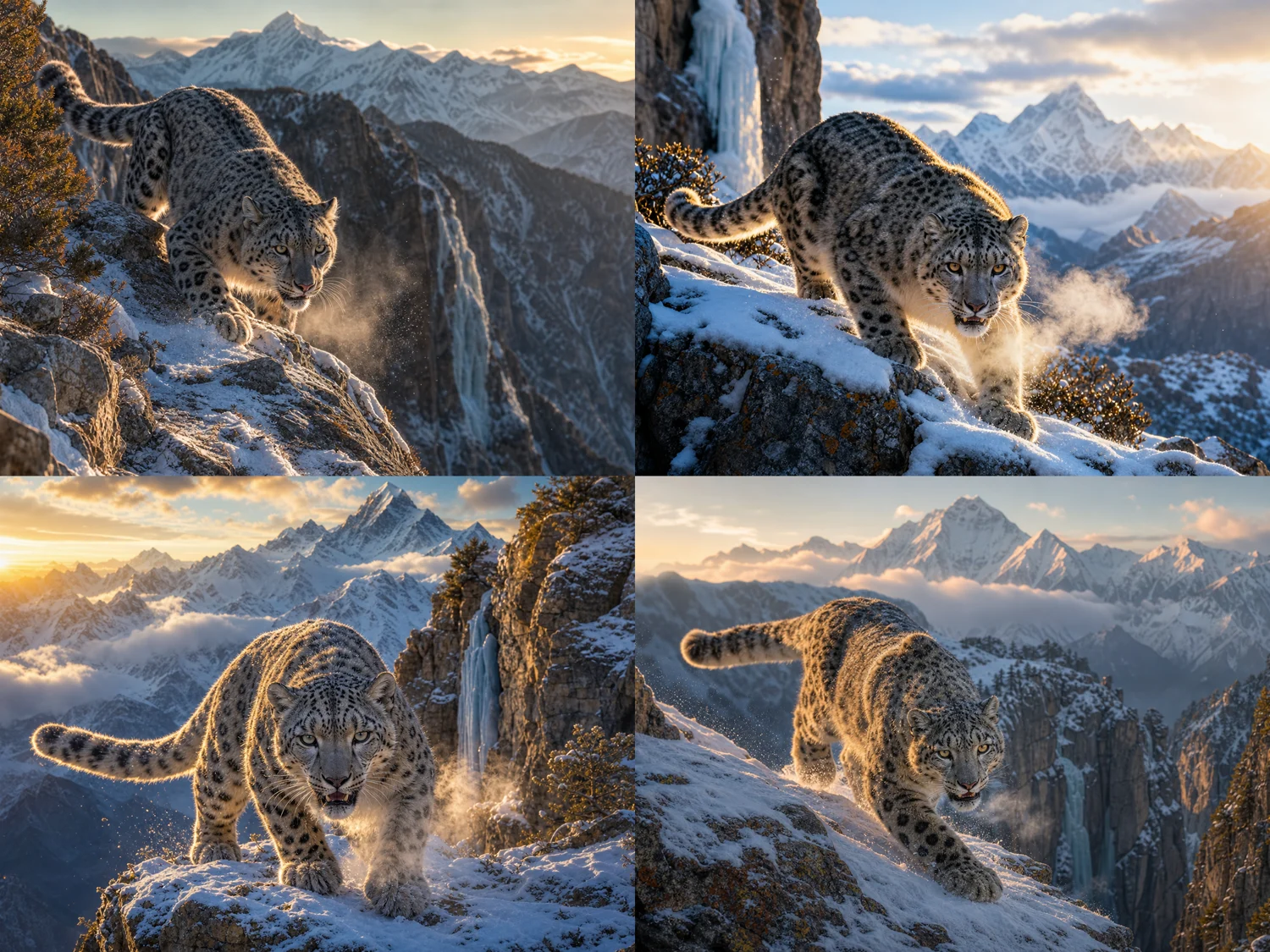
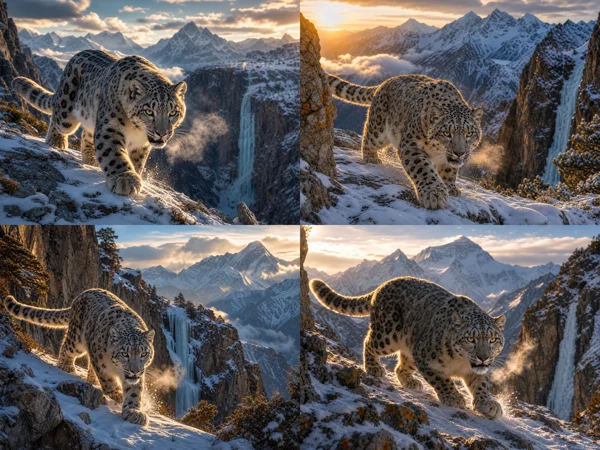
We ran each prompt four times in both ChatGPT and Gemini. Across those runs, we could not see a difference between the two formats.
The overall composition, surface textures, and lighting behaviors remained consistent across both formats.
Visual comparison
Comma-separated keyword results
Narrative sentence results
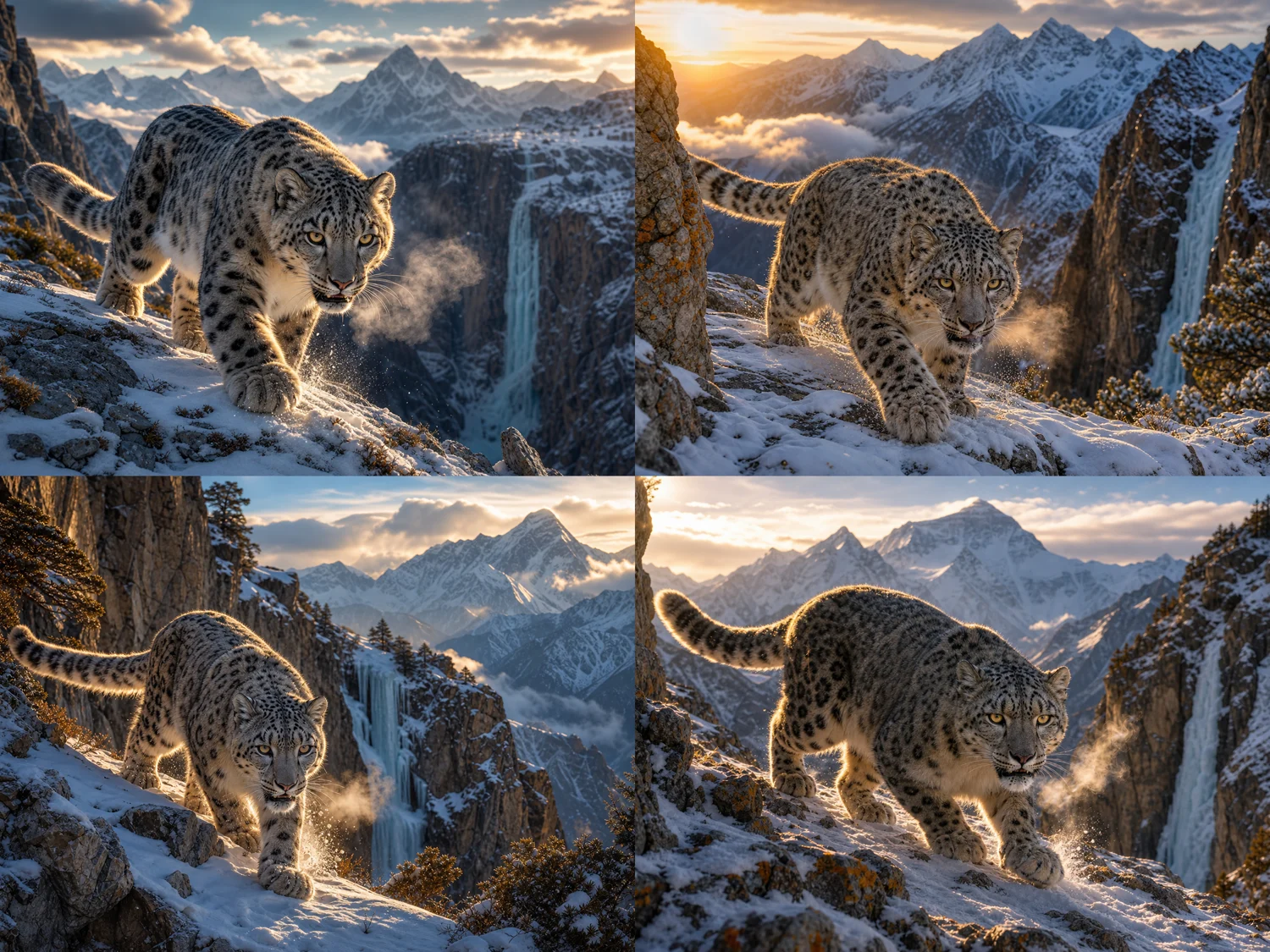
Visual evaluation points
Lighting precision: Warm rim lighting consistently defined the edges of the leopard's fur across both formats.
Micro-detail resolution: Fine elements, including condensed breath and displaced snow particles around the paws, rendered with equal clarity.
Spatial depth: The separation between the foreground ledge, midground canyon, and background mountain range remained sharp and distinct in both sets.
In our runs, both models read the scene the same way from either format, as long as the words stayed the same. We repeated the comparison on three more concepts, four runs each, and saw the same result.
Why we still lean toward full sentences
If both formats render the same, the choice comes down to which one is easier for you to write and edit. For complex scenes, we find sentences easier.
Natural thought progression
Breaking a scene into isolated tags means translating what you see into a list. Describing it directly, as if briefing a photographer, is usually faster and keeps your intent clear.
Precise spatial relationships
Sentences make it straightforward to specify how subjects interact with their surroundings. Describing how a subject touches an object, or how a specific light source grazes a surface texture, is clearer in narrative prose than in an unlinked list of descriptors.
Faster prompt iteration
Iterating on an existing image is simpler with conversational adjustments. Shifting a subject's gaze toward the background or modifying a light angle takes less effort when editing a sentence than when re-weighting and reorganizing tag clusters.
Which format to use
You do not need to rewrite your entire prompt library to conform to strict grammatical rules. If you prefer keyword lists, you can continue using them without sacrificing image quality. When planning complex scenes with intricate spatial layering, descriptive sentences will give you more direct control over the outcome.
Some older diffusion models and local pipelines were built around comma-separated tags, so check the documentation for the model you use:
These results come from four runs per prompt in ChatGPT and Gemini, and models change often. For how much detail to put in a prompt in the first place, see Should your AI image prompts be vague or ultra-specific?