Does assigning a persona actually change your AI image prompts?
Does starting an AI image prompt with a persona, like "You are a high-fashion editorial photographer shooting for Vogue magazine," change the image you get? We tested it in ChatGPT and Gemini, and in our runs it did not.
The habit comes from text models. In ChatGPT or Claude, a line like "act as a senior copywriter" can shift tone and structure, so many creators open image prompts the same way, casting the model as a Vogue fashion photographer or a National Geographic documentary photographer.
To check, we ran the same prompts with and without a persona, once as a short open-ended prompt and once as a detailed one, in both fashion and documentary photography.
How we set up the persona test
We selected high-fashion editorial portraiture as the baseline theme because styling, lighting, and art direction are central to the genre.
The experiment evaluated two distinct conditions:
Adding a persona to an open-ended prompt to test if it shifts the model's default aesthetic baseline.
Adding the same persona to a highly specific prompt with explicit camera, lighting, and wardrobe specs to check for subtle refinements.
We generated four images per prompt in ChatGPT and Gemini.
Test prompts
Experiment 1: Open-ended base prompts
Prompt 1A (Base):
A portrait of a young woman wearing an oversized trench coat on a city street, editorial photography.Prompt 1B (Base with persona):
You are a high-fashion editorial photographer shooting for Vogue magazine. A portrait of a young woman wearing an oversized trench coat on a city street, editorial photography.Experiment 2: Specific base prompts
Prompt 2A (Base):
A full-body editorial portrait of a 25-year-old East Asian woman wearing a structured beige wool oversized trench coat with dark sunglasses, standing on a rainy crosswalk in Tokyo at dusk. High-contrast directional lighting from neon storefronts casts reflections across wet asphalt. Shot on a 85mm f/1.4 lens, eye-level angle, sharp focus, cinematic color grading with muted warm tones.Prompt 2B (Base with persona):
You are a high-fashion editorial photographer shooting for Vogue magazine. A full-body editorial portrait of a 25-year-old East Asian woman wearing a structured beige wool oversized trench coat with dark sunglasses, standing on a rainy crosswalk in Tokyo at dusk. High-contrast directional lighting from neon storefronts casts reflections across wet asphalt. Shot on a 85mm f/1.4 lens, eye-level angle, sharp focus, cinematic color grading with muted warm tones.In our runs, the persona made no visible difference
Across ChatGPT and Gemini, adding the persona made no difference we could see. Poses, composition, lighting, and fabric texture looked the same with and without the role line.
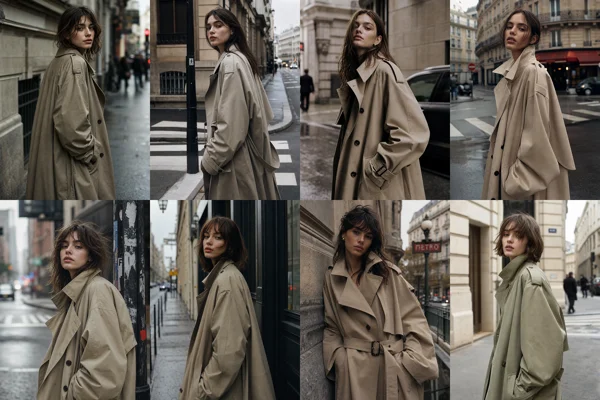
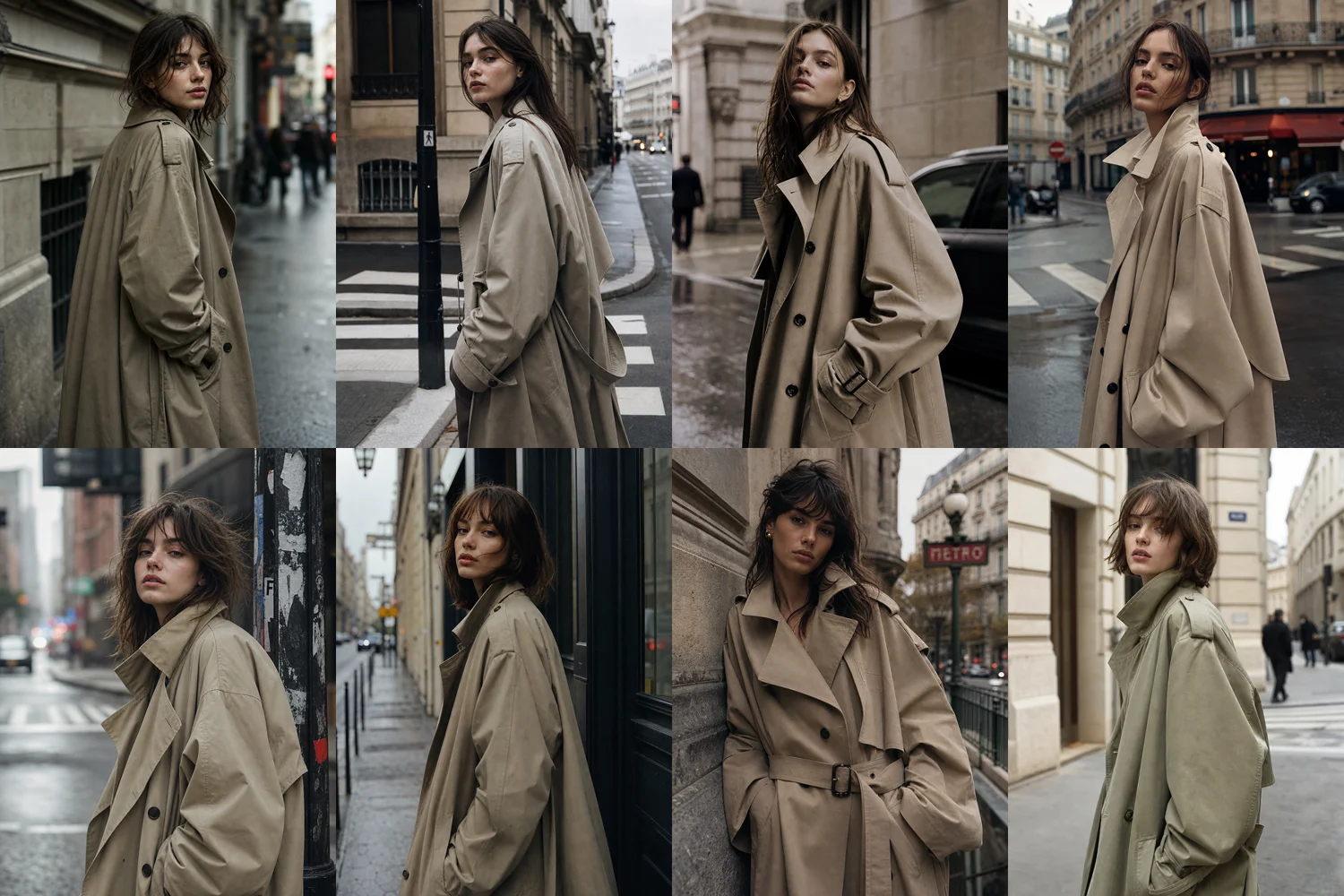
With the open-ended prompt, both versions varied in composition the way the model's defaults usually do. The Vogue line did not push the results toward a magazine look.
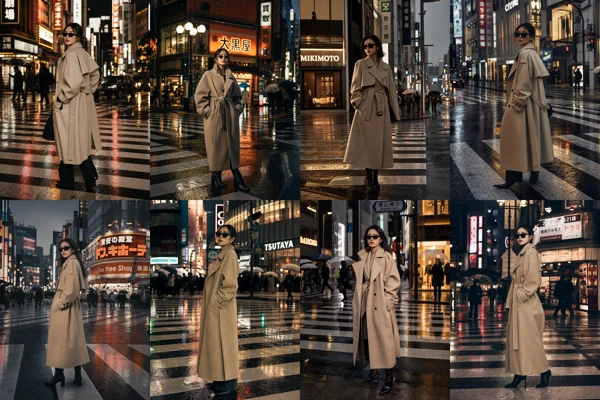
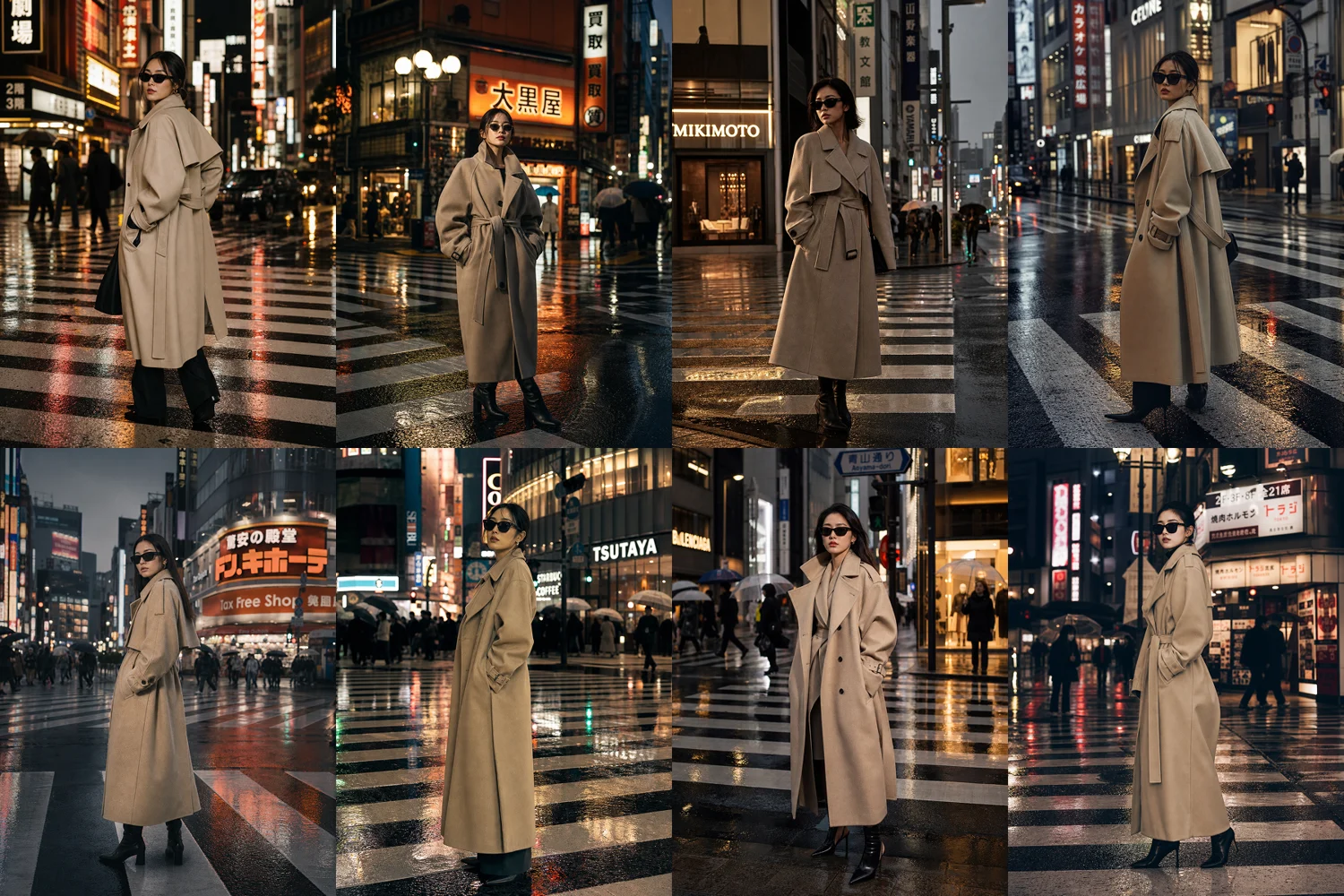
With the detailed prompt, the concrete descriptors decided the image: the 85mm lens, the neon reflections on wet asphalt, and the structured beige wool coat. We could not find anything the persona line added.
A second check with documentary photography
To check that this was not specific to fashion, we repeated the test with documentary photography. We paired a portrait of an elderly fisherman on a foggy dock with a National Geographic photographer persona.
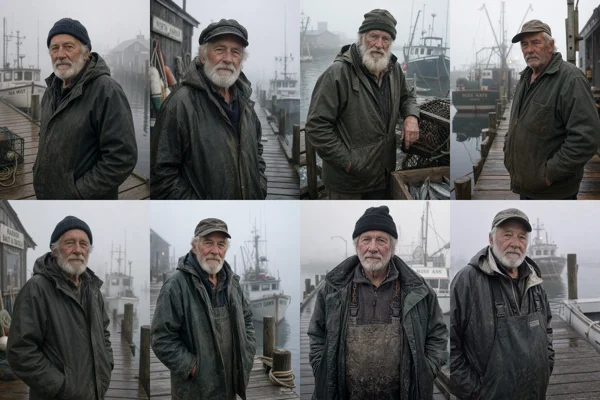
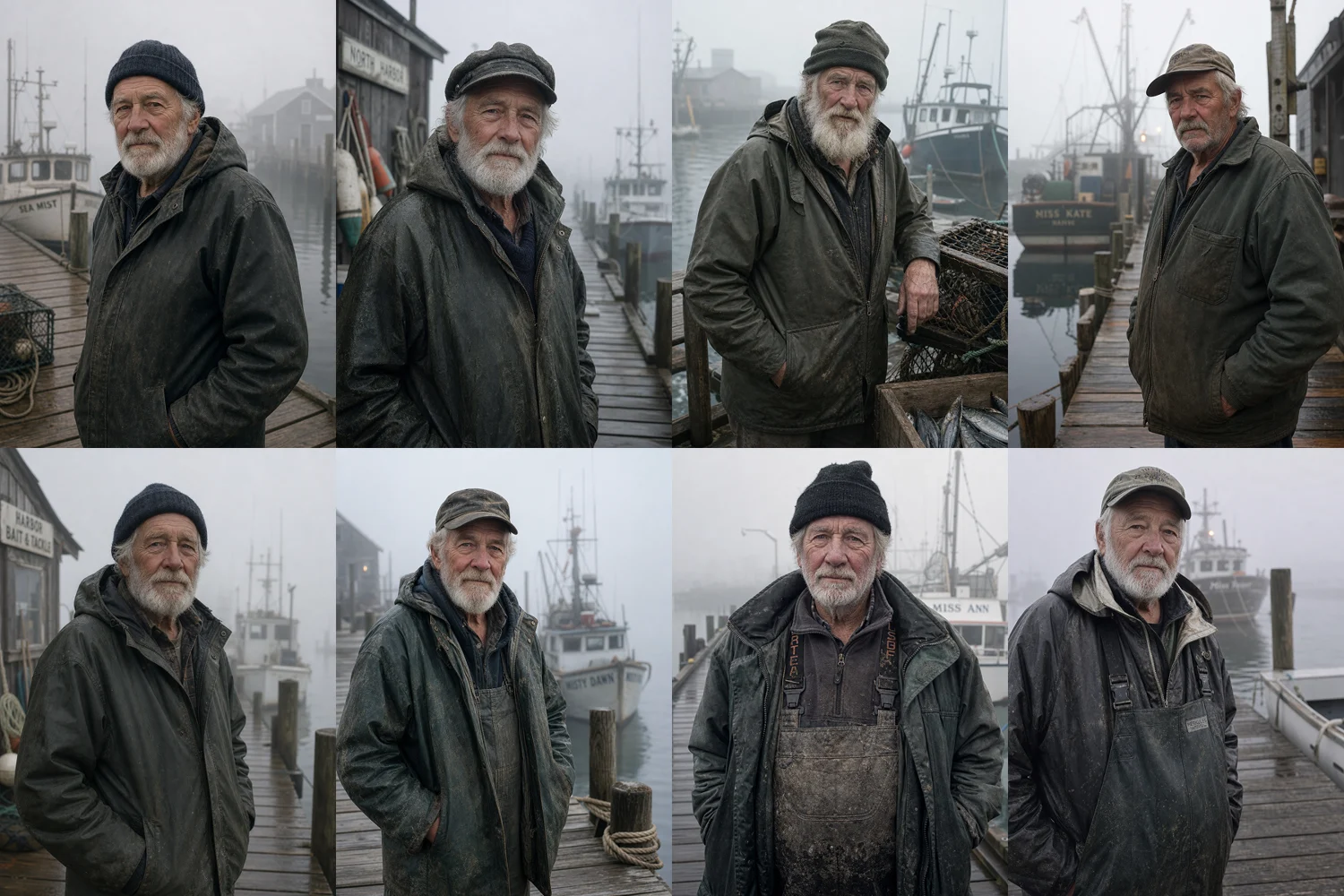
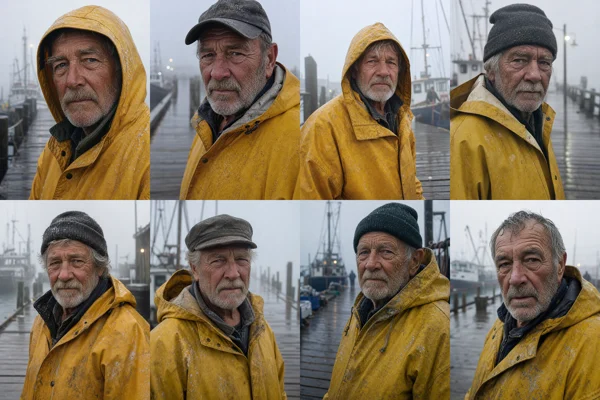
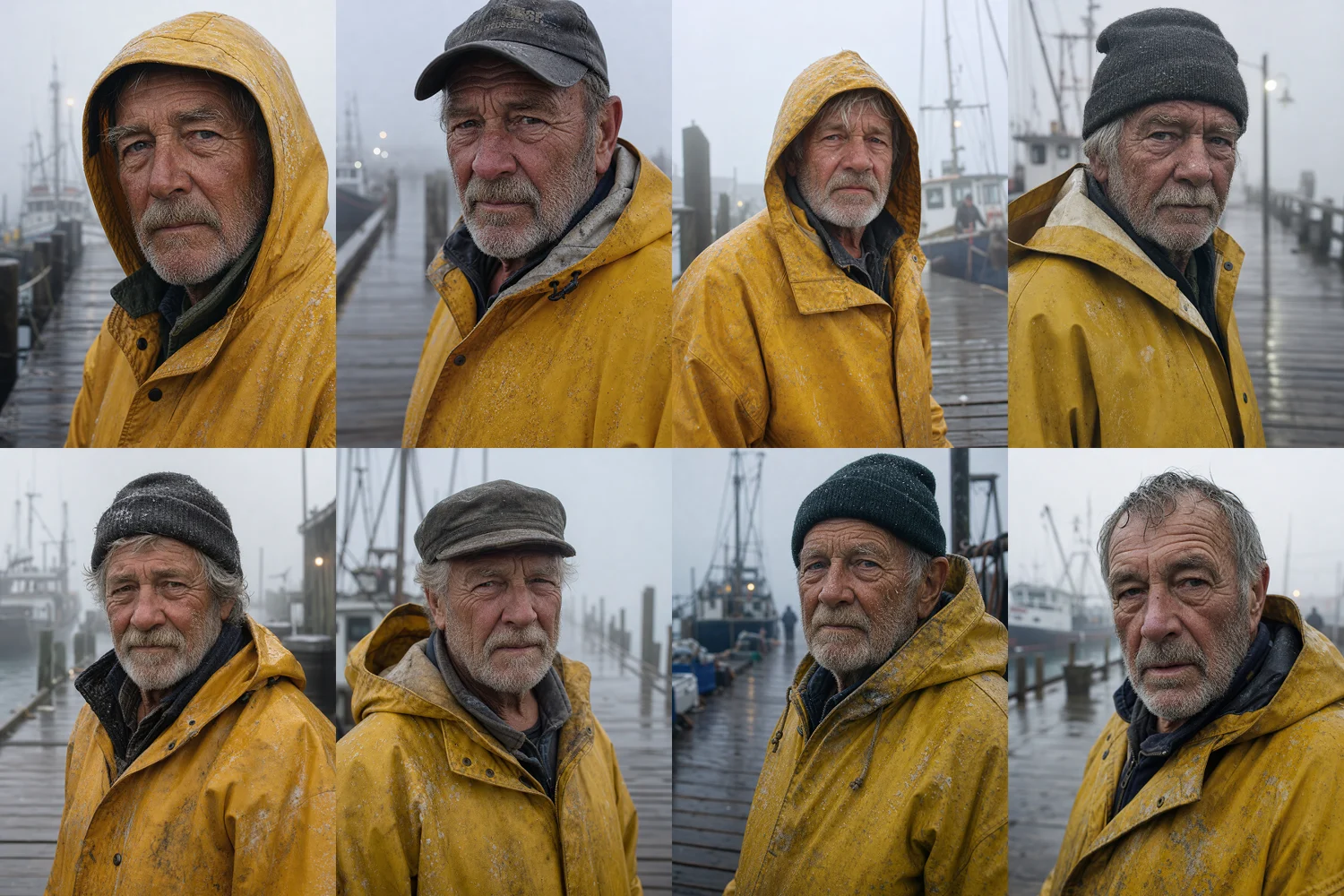
The result was the same. Weathered skin, fog, and natural documentary tones showed up when the prompt described them, and the persona did not add them on its own.
Why the persona might not register
We have not looked inside these models, so what follows is our reading, not a confirmed mechanism.
A chat model uses a persona to shape what it writes next: tone, vocabulary, point of view. An image model has to turn the prompt into something visible, and the parts it can act on are concrete: objects, materials, light, and position.
"You are a Vogue photographer" names no object, color, or light. Our guess is that the model finds nothing in that line to draw, so the rest of the prompt decides the image.
Where a persona does help
In our tests, a persona inside an image prompt only made the prompt longer.
The persona is more useful one step earlier, in a text model:
Ideate with a text LLM: Assign the persona to a conversational model like ChatGPT or Claude. Ask it to plan the visual details as that specialist. For instance, instruct it to act as a National Geographic photographer planning a coastal documentary portrait.
Extract concrete visual parameters: The text model translates the persona into tangible scene attributes: 50mm f/2 lens specifications, directional morning mist, weathered facial skin, and salt-stained wax canvas jackets.
Apply the exact descriptors to the image generator: Copy those concrete attributes directly into your image generation prompt.
That way, the photographer's expertise reaches the image model as things it can draw: a lens, a kind of light, a texture. If lens wording is your next question, we tested that in Do camera and lens prompts actually change your AI image outputs?