Does positive phrasing produce better AI image prompts?


Does positive phrasing, describing what you want instead of what you don't, produce better AI image prompts? We tested it in ChatGPT and Gemini. In our runs, both approaches kept unwanted objects out of the image, and we still recommend positive phrasing for the reasons at the end of this post.
The old advice was to avoid negatives entirely. Phrases like "no cars" or "without glasses" were said to make diffusion models skip the negation, latch onto the noun, and draw the very thing you wanted to exclude.
It is the pink elephant problem: tell someone not to picture a pink elephant, and they picture one.
To see whether that still holds, we started with a literal pink elephant prompt, then compared negative and positive versions of two 700-character prompts: a street scene and a portrait.
How we set up the negation test
We structured our test into two stages. First, we ran a literal pink elephant baseline to check direct negation handling. Second, we tested complex 700-character scenes, contrasting detailed negative exclusion lists against direct affirmative descriptions. We ran each prompt four times in ChatGPT and Gemini.
Test prompts
Baseline test: The pink elephant paradox
A photo of a cozy modern living room with a sofa, coffee table, and indoor plants, without a pink elephant.Theme 1: Empty historic street
Negative prompt (1-A):
An authentic 35mm architectural street photography shot of a historic European cobblestone street in the Old Town at dawn during early morning blue hour. Dramatic perspective looking down a narrow medieval lane with weathered stone facades, antique wrought-iron lanterns glowing with warm tungsten light, and soft golden morning mist rising between buildings. Do not include modern cars, without parked vehicles, no moving traffic, do not add pedestrians, no walking tourists, without people on the street, no commercial neon signs, do not include trash cans, without asphalt roads. Cinematic composition, rich stone textures, deep shadows, Kodak Portra 400 film grain.Affirmative prompt (1-B):
An authentic 35mm architectural street photography shot of a historic European cobblestone street in the Old Town at dawn during early morning blue hour. Dramatic perspective looking down a narrow medieval lane with weathered stone facades, antique wrought-iron lanterns glowing with warm tungsten light, and soft golden morning mist rising between buildings. The entire roadway is completely empty and deserted, showing pristine untouched stone pathways in total morning silence, isolated architectural tranquility, undisturbed ancient alleyway, pure historic stone pavement. Cinematic composition, rich stone textures, deep shadows, Kodak Portra 400 film grain.Theme 2: Minimalist natural beauty portrait
Negative prompt (2-A):
A clean studio close-up portrait of a 20-year-old woman with a serene expression, shot on an 85mm f/1.8 portrait lens under soft diffused north-facing window light against a neutral gray linen backdrop. Eye-level framing with sharp focus on the iris and natural skin pores. Do not include heavy makeup, without eyeliner, no false eyelashes, do not add bright red lipstick, without foundation, no jewelry, do not include earrings, without nose rings, no necklace, do not add eyeglasses, without sunglasses, no hair clips. Authentic raw beauty photography, natural skin translucency, minimal aesthetic, shallow depth of field.Affirmative prompt (2-B):
A clean studio close-up portrait of a 20-year-old woman with a serene expression, shot on an 85mm f/1.8 portrait lens under soft diffused north-facing window light against a neutral gray linen backdrop. Eye-level framing with sharp focus on the iris and natural skin pores. Featuring completely bare natural skin, unadorned bare face, natural clean eyelashes, subtle bare lips with natural moisture, unembellished ears and neck, unobstructed open facial features, simply combed loose natural hair. Authentic raw beauty photography, natural skin translucency, minimal aesthetic, shallow depth of field.In our runs, both approaches kept unwanted objects out
Across our runs in ChatGPT and Gemini, negative phrasing did not bring back the objects it named.
Baseline test: The pink elephant paradox
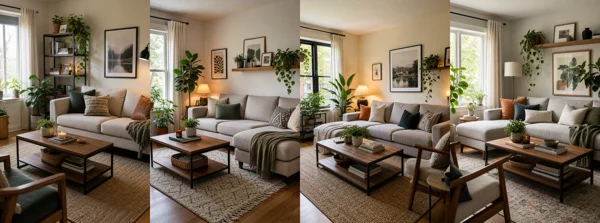
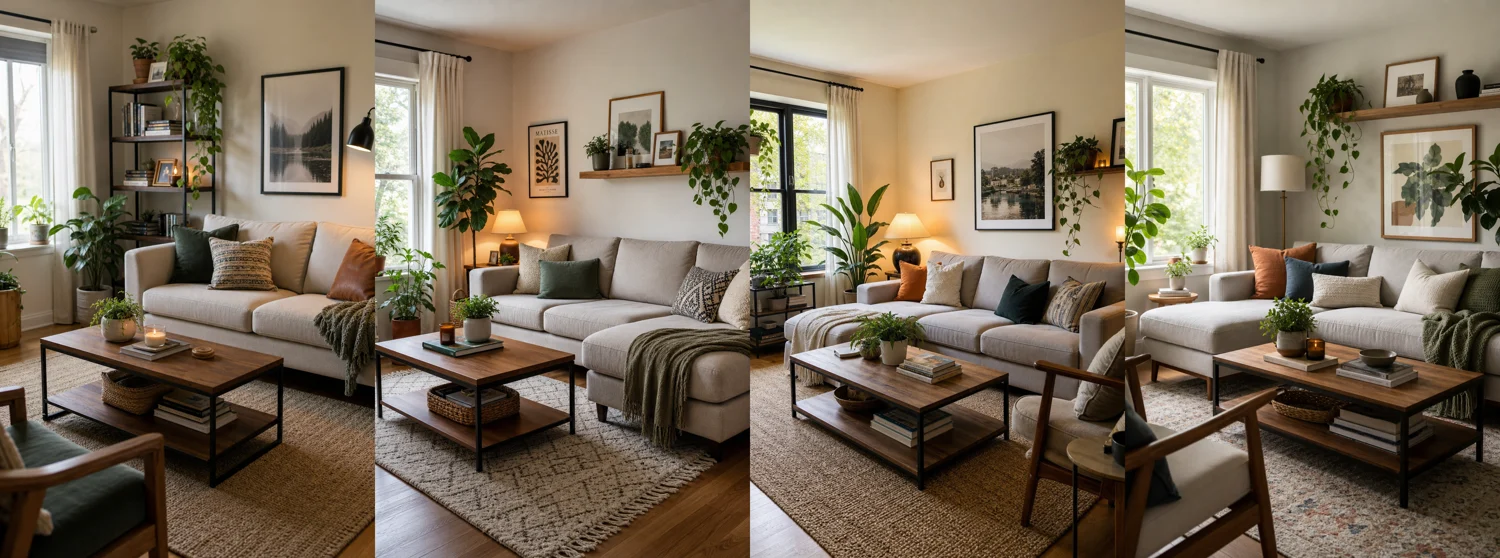
In the baseline test, both models rendered a standard modern interior in every run. No pink elephant appeared in the space, nor did secondary visual artifacts such as elephant-shaped wall art or patterned cushions.
Theme 1: Empty historic street
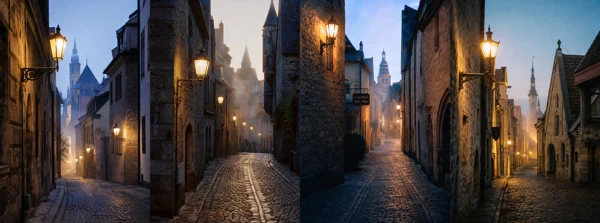
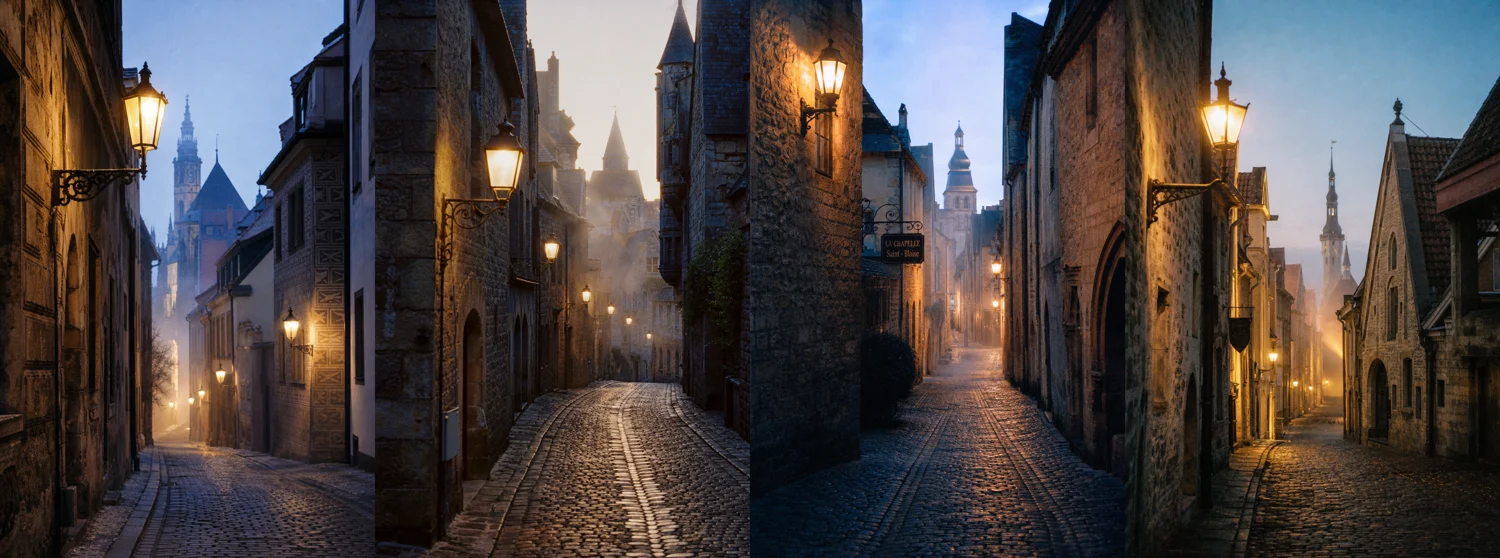
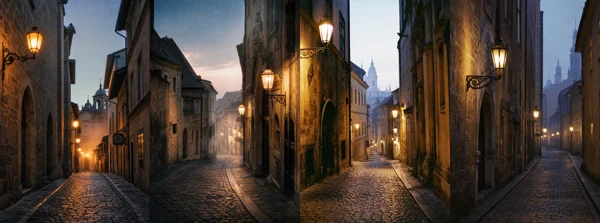
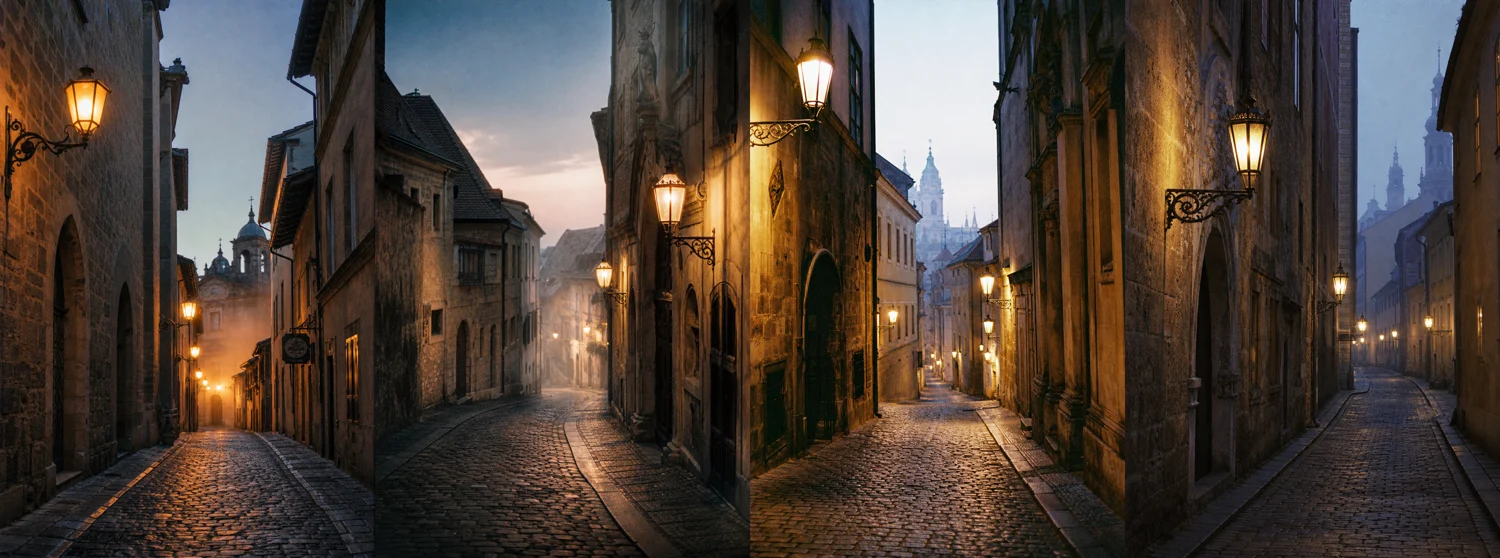
In the street test, lines like "do not include modern cars" and "without pedestrians" kept the street empty. The negative and positive versions both produced a deserted stone lane, with similar facades and light.
Theme 2: Minimalist natural beauty portrait
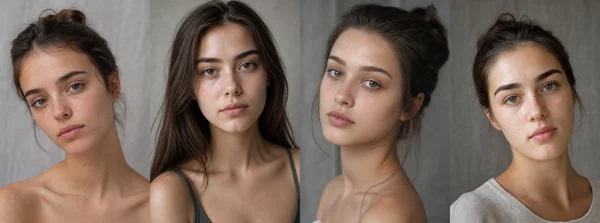
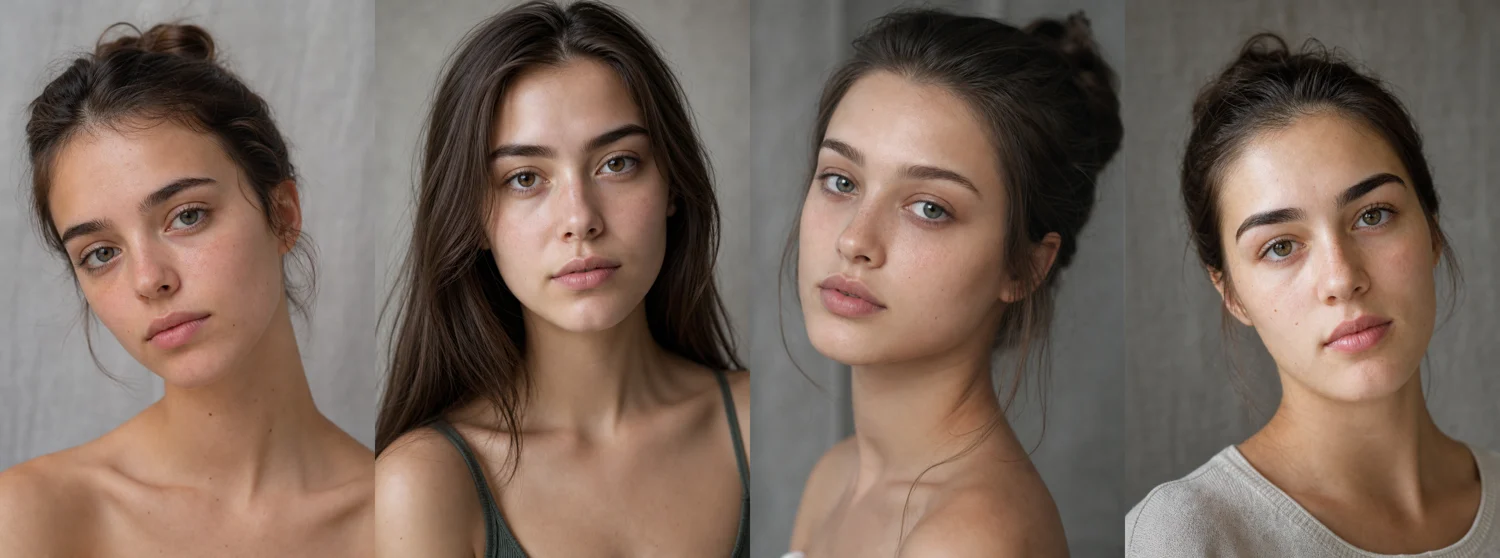
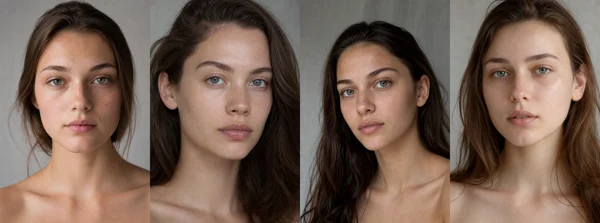
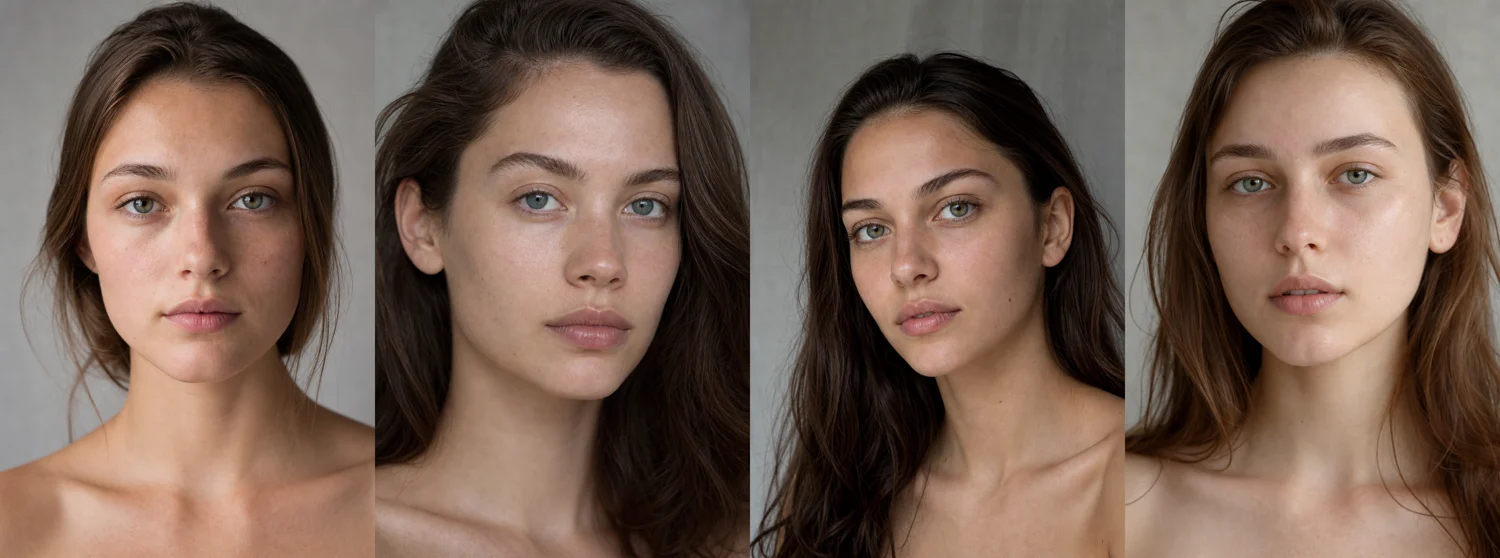
In the portrait evaluation, negative terms like "no earrings," "without sunglasses," and "no heavy makeup" worked as intended. The model produced an unadorned subject with natural skin textures, free from cosmetics and accessories.
Why negation might work now
A likely explanation is the text encoder. Earlier diffusion models commonly used CLIP-style encoders, which are widely reported to handle negation poorly: the word "car" could still pull in car-like features even after "no."
ChatGPT and Gemini generate images with systems built around large language models, which read full sentences, including "without" and "do not include." We have not looked inside either system, so take this as our reading of the results, not a confirmed mechanism.
Why we still write positive prompts
Negative phrasing worked in our tests, but we still default to positive descriptions, for three reasons:
Affirmative phrasing reduces prompt bloat: Negative prompting forces you to anticipate and list every unwanted element. Describing a setting as "deserted, pristine, untouched" defines the entire scene in three words instead of a dozen exclusion lines.
Positive descriptors guide visual texture: Telling the model what not to include provides zero information about what should be there. Describing "bare natural skin with visible pores" gives the generator actionable lighting and surface instructions that negative exclusions cannot provide.
Positive prompts travel better: Not every tool reads full sentences the way ChatGPT and Gemini do. Older and open-source diffusion models may still misread "no," and positive phrasing avoids the problem.
These results come from four runs per prompt in ChatGPT and Gemini. Models change often, and other tools may handle negation differently. For how much detail to put in a prompt in the first place, see Should your AI image prompts be vague or ultra-specific?